
Handgun Ownership in Canada: What You Actually Need to Know Before You Buy
You cannot buy a handgun in Canada without a Restricted PAL. That's the hardest fact, and it's non-negotiable. The Restricted PAL is separate from your standard PAL—you need to apply through your provincial firearms officer, pass an additional background check, take a restricted firearms safety course, and wait. In most provinces, that waiting period runs 45 days minimum, though I've seen it stretch longer depending on backlog. Your standard PAL won't cut it. If someone tells you otherwise, they're selling you a story.
The Restricted PAL application costs around $50–80 depending on your province. You'll need to include proof of firearms safety training specific to restricted weapons. The Canadian Firearms Safety Course (CFSC) covers non-restricted rifles and shotguns. For the Restricted PAL, you need the Canadian Restricted Firearms Safety Course (CRFSC). Some ranges and shooting clubs offer both on the same weekend. I paid $200 for the combined course at my club in Ontario. You'll also need a reference—someone who's known you for at least two years and isn't related to you. That person fills out a form swearing they know your character. The RCMP runs the background check, and they dig. They're looking at your criminal history, any domestic violence findings, restraining orders, mental health adjudications, and drug convictions. If you're clean, you're in the system.
Once you have your Restricted PAL in hand, you can buy restricted handguns. But there's another wall: club membership. In Canada, you cannot legally own a restricted handgun unless you're a member of an approved shooting club or range. This is the law. Period. You can't just own it for home defense or because you like it. The firearms act requires that restricted firearms be for target shooting purposes. So you need to join a club affiliated with the Canadian Association of Shooting Sports (CASSO) or Shooting Federation Canada (SFC). Most clubs charge between $300–600 per year in membership fees. Yes, that stings. But it's mandatory.
Restricted vs. Non-Restricted vs. Prohibited: Know the Categories
This matters because it changes where you can take the gun and what you can do with it. Non-restricted handguns don't exist in Canada anymore—not really. Almost every centerfire handgun is classified as restricted. The handguns you'll actually buy are restricted. That means:
- You can only transport it directly between your home and an approved shooting range. Detours aren't legal. I drive straight to my club on Saturday mornings. I don't stop at the gas station. I don't grab coffee. The gun stays locked in a secure case, unloaded, with ammunition stored separately or locked in its own container.
- You must store it locked and unloaded. Cabinet or safe, trigger locked, bolt locked, or in the case of a handgun, frame locked. The ammunition goes in a separate locked container.
- You cannot carry it in the field. Even on your own property, it's not legal for self-defense or personal protection.
Prohibited handguns are a smaller category—barrels under 4.14 inches and chambered in certain calibers, though the rules changed somewhat in 2023. The federal government has been moving toward banning handguns outright, so this landscape keeps shifting. If you're thinking of buying used, check the RCMP handgun classification database first. Don't waste money on a gun only to discover it's prohibited.
Registration: Yes, Your Handgun is Registered
Every handgun you buy is registered with the RCMP. This is automatic when the dealer files the transfer. You don't do it yourself. The dealer inputs the information, and your gun gets a registration number tied to your PAL. If you sell it, you inform the RCMP, and it transfers to the new owner—but only if they have a valid Restricted PAL. You cannot sell a restricted handgun to someone without one. That's a federal offense.
Handguns Worth Buying: The Realistic Canadian Market
I'll be straight with you: your options are limited compared to the US, and prices are higher. Expect to pay $600–1,000 for a quality used handgun and $900–1,400 for new stock.
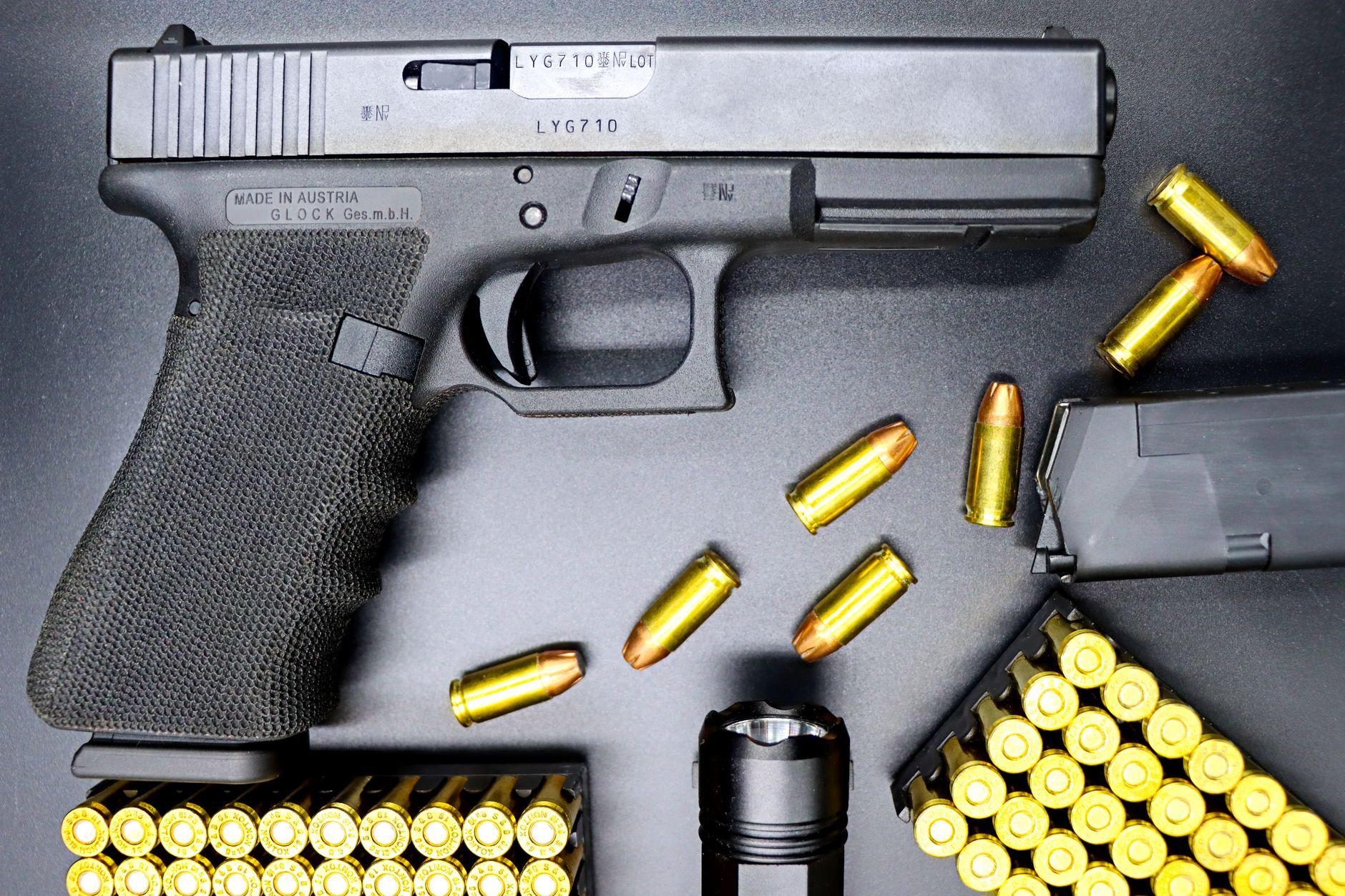
Glock 17 (Gen 4 or Gen 5) — The 17 is the workhorse. Reliable, simple to maintain, 9mm ammunition is cheap and available. I own one. Used runs $650–750 CAD. New, you're looking at $1,100–1,200. It's not flashy, but it shoots.
Beretta 92FS — Steel frame, DA/SA trigger, feels like a gun. Heavier than a Glock, which some shooters prefer. Used Berettas in Canada run $700–850. New ones are scarcer. Full metal construction means higher recoil control and a smoother trigger in double-action. It's a legitimate choice if you want something different.
CZ Shadow 2 — This is the competition gun. Single-action, crisp trigger, steel frame. Not for beginners, but if you're getting serious about target shooting, this is legitimate. Expect $1,300–1,600 CAD new. Used ones hold value around $1,000–1,200.
Walther PPQ — Underrated in Canada. 9mm, good ergonomics, reliable. Less common than Glocks, so deals exist. Around $800–1,000 new.
Smith & Wesson M&P9 — Practical, modular, solid trigger. $900–1,100 new in Canada.
My advice: start with a Glock 17 or 92FS if you're new. They're not the most exciting guns, but they're available, parts are easy to find at Canadian dealers like Wolverine Supplies or SFRC, and the community around them is large. You'll learn the fundamentals without fighting the gun.
The handgun market in Canada is smaller than it should be, thanks to regulations. But if you commit to the process, get your Restricted PAL, join a club, and follow the law, you can own a handgun and participate in a sport that millions do safely. Just go in knowing the rules and the costs upfront. No surprises that way.