
Shooting ranges have specific rules and culture. Violating them ranges from embarrassing to genuinely dangerous. The good news: the rules are simple, consistent across most ranges, and make complete sense once you understand why they exist.
This guide covers indoor range protocol, which applies to 90% of first visits. Outdoor ranges and gun clubs operate similarly with minor variations. If you're going to an outdoor range, read the posted rules when you arrive — they vary more widely.
What to Bring
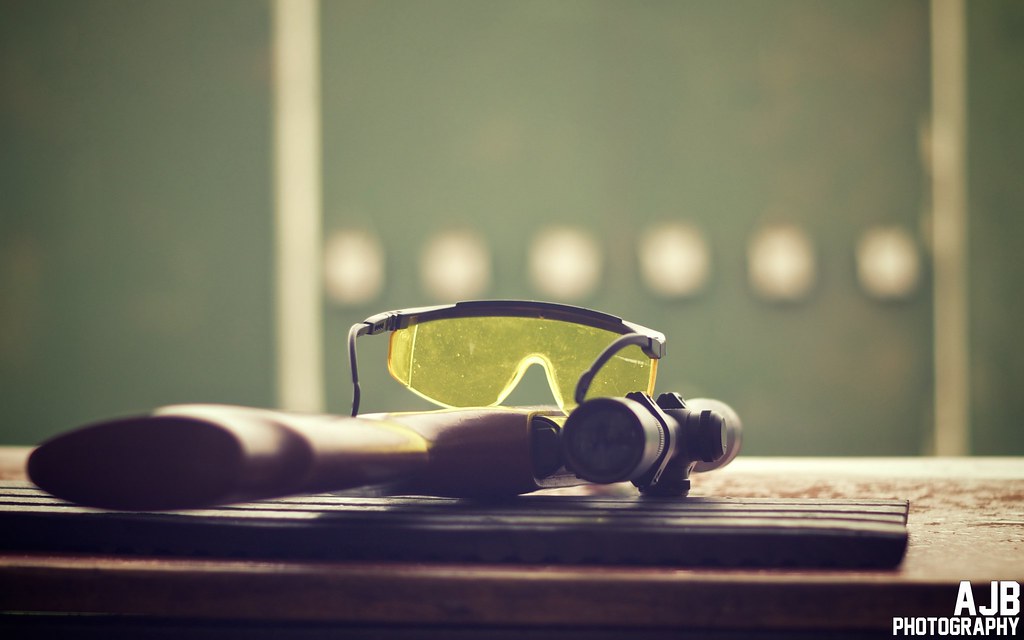
Eye protection (shooting glasses) — mandatory at every range, no exceptions. Standard safety glasses or prescription glasses work; the range may have loaners but they're typically scratched and uncomfortable. Buy a pair of Wiley X or Pyramex shooting glasses for $15–$30 before your first visit.
Ear protection — also mandatory, always. You have two options: foam earplugs ($1–$5, effective, disposable) or earmuffs ($20–$150). For a first visit, buy a pair of Howard Leight Impact Sport electronic earmuffs ($50–$70). They suppress dangerous noise while amplifying quiet sounds — you can have a conversation normally while wearing them, which makes instruction easier. Your hearing doesn't regenerate. Protect it every time.
Ammunition — most ranges allow you to bring your own. Buy from the source list in our ammo guide. Some ranges sell ammo at a premium at the counter; ranges often prohibit steel-case ammo (it damages steel targets) — check the range's website before buying bulk steel case.
Your firearm — if you own one, bring it unloaded in a case. All firearms must be cased when entering and leaving the range. Some ranges require a trigger lock as well; call ahead.
ID — most ranges require government-issued ID. Some require you to be 21 for handguns (federal standard for retail purchase, many ranges apply it to range use).
Range Commands and Ceasefire Protocol
Understanding range commands is the most important safety knowledge for a first visit:
'CEASE FIRE' — the most important phrase on any range. When you hear it from anyone — rangemaster, staff, another shooter — stop shooting immediately, finger off the trigger, point the muzzle downrange. A ceasefire is called when someone needs to go downrange (to check or change targets, retrieve equipment, or handle a safety situation). Never argue about a ceasefire call.
'RANGE IS HOT' — firing is permitted. Treat all firearms as loaded.
'RANGE IS COLD' — do not fire. This is when you may go downrange. All firearms must be unloaded, actions open, and set on the bench or in their case during a cold range.
'MAKE SAFE' — unload your firearm, show the range officer the empty chamber.
At most indoor ranges, the rangemaster controls the ceasefire on a fixed schedule (every 15–20 minutes). You'll hear an announcement, a buzzer, or both. Stop shooting when it's called — even if you're in the middle of a string — and wait for the 'range is hot' signal before resuming.
Etiquette: How Not to Stand Out for the Wrong Reasons
Experienced shooters will notice your muzzle discipline and trigger discipline immediately. They will not comment (usually) but they will form opinions. Follow these rules and you'll be welcomed as someone who knows what they're doing:
Never sweep anyone — the muzzle never points at any person, ever. This is a hard rule. When handling your firearm, be conscious of where the muzzle is at all times. If you need to point it at the ceiling or the floor to be safe, do that.
Keep the action open when not shooting — at the bench, firearm unloaded with slide locked back or cylinder open tells everyone around you the gun is safe.
Don't touch anyone else's firearm without explicit invitation — and ask before picking up firearms for sale or display in the gun store portion of the range.
Limit conversation while shooting — most ranges have a noise level that makes conversation difficult anyway, but the shooting line is not a social area. Save the debrief for the lounge or parking lot.
Clean up your brass — pick up your spent casings unless the range explicitly states they collect brass (some do, for resale). Leave your lane cleaner than you found it.
What to Work On Your First Session
Keep it simple. Your first range session has one objective: get comfortable with the fundamentals in a live-fire environment.
Start at 7 yards (21 feet) — this is the standard defensive shooting distance and a reasonable accuracy benchmark for a new shooter. If you're shooting a rented firearm, 7 yards exposes real grip and trigger issues without the frustration of trying to be precise at long distance before the basics are solid.
Don't try to shoot fast. Speed is a byproduct of consistency, and consistency takes repetition. One hundred rounds of deliberate, focused practice at 7 yards builds more skill than 100 rounds of blasting quickly at any distance. Accuracy first, always.

DJ Cavalcanti founded DownRange on a simple idea: the Second Amendment community deserves better information. He built the platform to make firearms news, state gun laws, legal developments, and market intelligence freely available to every gun owner — in one place, updated constantly.