NFA Registration Requirement Dies: First Legal Suppressor Transfers Close August 13
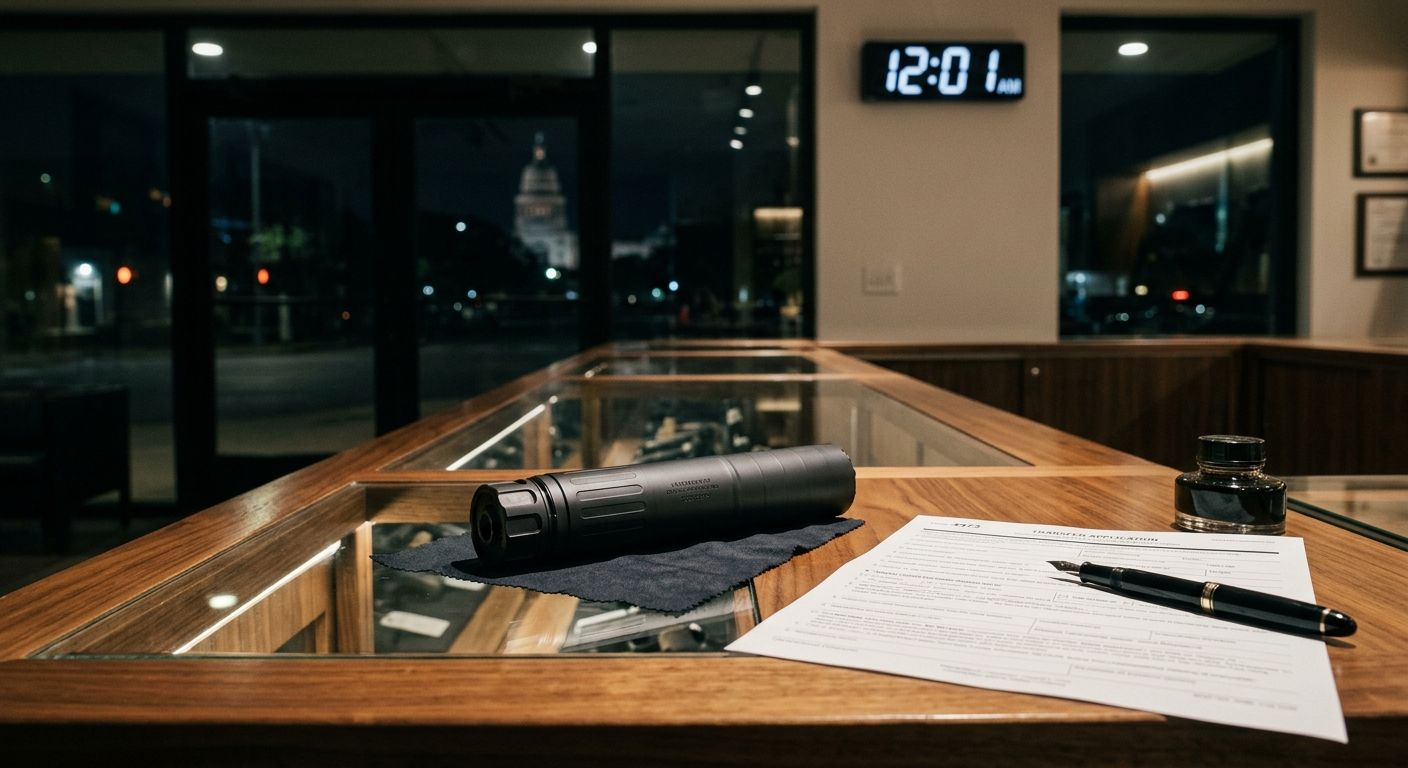
Gun Owners of America (GOA) and Silencer Shop completed the first lawful suppressor transfers without federal National Firearms Act registration on August 13, 2026, at 12:01 A.M. CT. The transfers marked the end of a mandatory registration regime that governed suppressors since the NFA's enactment in 1934. High-profile Second Amendment advocates, including Brandon Herrera and Texas State Representative, participated in the historic transfers, signaling a fundamental shift in how the federal government treats suppressor ownership.
Key Details
- First unregistered transfers occurred August 13, 2026, ending 92 years of mandatory NFA suppressor registration.
- GOA and Silencer Shop coordinated the transfers, positioning themselves as the first entities to execute sales under the new legal framework.
- Transfers involved prominent Second Amendment activists and state-level elected officials, ensuring maximum visibility for the change.
- No federal Form 4 submissions or ATF approval required for these transactions under current law.
Why It Matters for Gun Owners
This shift eliminates the most burdensome suppressor acquisition process in modern firearms ownership. Gun owners no longer wait 9–12 months for ATF Form 4 approval, pay the $200 tax stamp, or provide photographs and fingerprints to the federal government. States where suppressors remain legal now see immediate access without the registration paper trail. For competitive shooters, hunters managing hearing damage, and shooters on public ranges, suppressors transform into ordinary accessories rather than serialized, catalogued items. The practical effect: suppressors cost less overall, arrive faster, and carry no ATF monitoring. This impacts manufacturers, dealers, and individual buyers across every state permitting suppressor ownership. Suppressors now function like stocks or optics—purchase and install without federal entanglement.
DownRange Analysis
This represents a clean Bruen victory. The Supreme Court's 2022 decision requiring regulations to match historical tradition created legal vulnerability for the 1934 NFA's blanket suppressor registration scheme. GOA likely pursued litigation that exposed the government's inability to justify registration as consistent with founding-era firearm regulation. The market now sees suppressor prices normalize downward as the $200 tax and processing delay vanish. Manufacturers immediately benefit from streamlined supply chains. The remaining question: does the federal government attempt legislative revival, or do they accept that suppressor registration lost its constitutional moorings? Gun owners should expect this framework to spread to other NFA items facing similar constitutional pressure. Document your purchases for state compliance, but the federal registration burden has effectively ended.