Supreme Court Shows Reluctance on Second Amendment Cases Since Heller
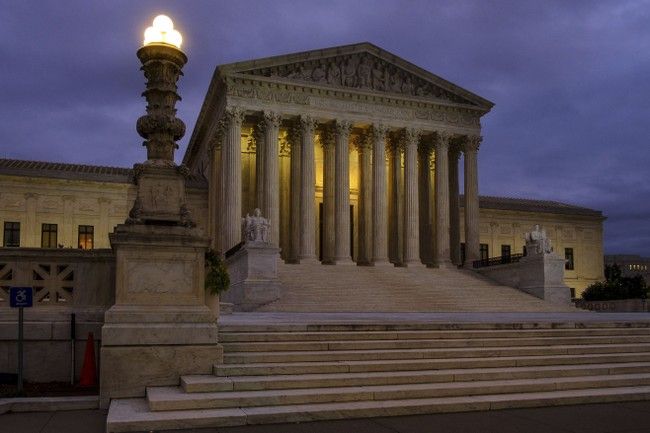
The Supreme Court has touched Second Amendment cases only six times in the 18 years since District of Columbia v. Heller established that the Constitution protects an individual's right to keep and bear arms. In 2010, the Court struck down Chicago's handgun ban in McDonald v. Chicago. A 2016 per curiam decision rejected Massachusetts' justification standard for carrying permits. The sparse docket raises questions about whether the Court views 2A cases as priority litigation or remains risk-averse after Heller's political backlash.
Key Details
- 18 years, six cases: The Supreme Court's minimal Second Amendment docket since Heller stands in sharp contrast to the volume of lower court gun rights litigation across the country.
- McDonald (2010): Incorporated the Second Amendment against states through the Fourteenth Amendment, making Heller applicable nationwide.
- Massachusetts per curiam (2016): Reversed a state justification requirement for carry permits, signaling the Court would police state-level restrictions on bearing arms.
- The Court has declined cert on numerous high-profile cases involving magazine bans, red flag laws, and assault weapons restrictions since Heller.
Why It Matters for Gun Owners
Gun owners waiting for the Supreme Court to clean up obvious state infringements—magazine restrictions, may-issue carry laws, and cosmetic assault weapons bans—have been left hanging. Lower courts have split on critical 2A questions, and without Supreme Court guidance, states operate under wildly inconsistent standards. A gun owner legal in Massachusetts faces prosecution in California for the same firearm. The Court's reluctance to grant cert means the Heller framework remains undefined in crucial areas: Does the Second Amendment protect modern sporting rifles? Can states impose ammunition taxes? Can they ban modern semi-automatic weapons? Until SCOTUS answers these questions, gun owners rely on expensive litigation in federal courts that often apply conflicting interpretations of Heller and New York State Rifle & Pistol Association v. Bruen.
DownRange Analysis
The Court's hands-off approach since Heller mirrors a pattern of judicial restraint after landmark decisions generate political heat. Heller provoked fierce opposition and spawned a sustained strategy by gun control advocates to litigate state laws aggressively. SCOTUS may be waiting for circuit court splits to deepen before accepting cases, or the current composition may lack five votes for further clarifications on bearing arms. Bruen (2022) reset the analytical framework, but the Court has shown no appetite to build on it. Gun owners should expect continued lower court battles and state-by-state variation. Second Amendment advocates must win fights in district and circuit courts because SCOTUS review remains a long shot. Strategic litigation targeting the clearest constitutional violations—not sympathetic fact patterns—remains the path forward.