Federal Government Targets San Jose's $1,600 Concealed Carry Application Cost
The Department of Justice filed suit against San Jose, California this week over the city's $1,600 concealed carry permit application fee. Assistant Attorney General Harmeet Dhillon warned city officials last week that the exorbitant cost violated Second Amendment rights. San Jose refused to lower fees, forcing the DOJ's hand.
The fee structure makes obtaining a permit financially impossible for most citizens. San Jose charges $1,600 upfront, then $1,600 every two years for renewal. No other major California city charges anywhere near this amount. Los Angeles charges $385. San Diego charges $200. Even in high-cost jurisdictions, $1,600 stands alone as punitive.
Why It Matters for Gun Owners
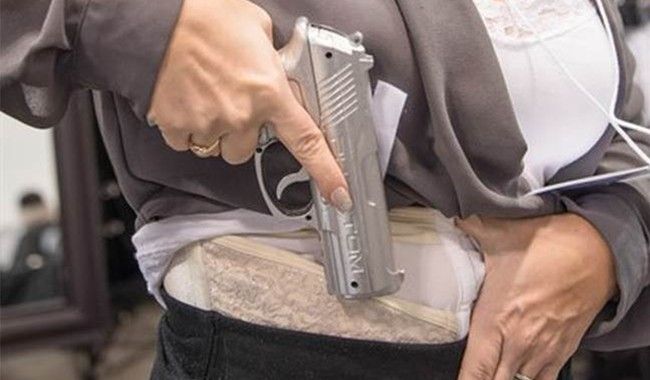
This case directly impacts your ability to carry legally. California's "may-issue" system gives local police chiefs discretion over permit approval. San Jose's police chief weaponized that discretion with pricing. High application fees function as an outright ban for working-class gun owners.
The DOJ argues San Jose's fee system violates the Second Amendment as established by New York State Rifle & Pistol Association v. Bruen. That 2022 Supreme Court decision struck down vague "proper cause" standards. The Bruen decision also questions whether arbitrary fees that effectively deny rights pass constitutional muster.
If DOJ wins, it sets precedent for challenging excessive fees nationwide. Anti-gun cities have adopted similar tactics in California, New York, and Illinois. San Jose's loss could force jurisdictions to implement reasonable fees or face federal litigation. That helps carriers in hostile territories.
Conversely, a San Jose victory emboldens other cities to raise fees as a de facto prohibition. Chicago, New York City, and San Francisco watch this case closely. Gun owners need federal courts to reject fee structures designed to price out constitutional rights.
Background
San Jose established its $1,600 fee in 2021 under Police Chief Eddie Garcia. The city claimed fees would pay for background checks and processing. Independent analysts found the actual cost per application runs $150-$300. The remaining fee amount—roughly $1,300 per application—flowed directly into city general revenue.
San Jose processes roughly 80-100 permits yearly. That generates $128,000 to $160,000 annually in excess revenue. The fee hike coincided with the city declaring a gun violence emergency. Rather than address root causes, San Jose chose to price out legal carriers.
California's Attorney General Rob Bonta opposed the DOJ lawsuit, defending San Jose's fee structure. Bonta represents California's anti-gun establishment. His office argued the fee doesn't violate the Second Amendment because some people can pay it. That argument fails constitutional scrutiny—rights don't disappear based on income level.
Harmeet Dhillon, the DOJ's Asian-American attorney, personally warned San Jose officials before filing suit. They ignored the warning. The lawsuit names the city and Police Chief Garcia directly.
DownRange Bottom Line
San Jose's $1,600 fee functioned exactly as intended: stopping regular citizens from exercising Second Amendment rights. The DOJ correctly identified this as unconstitutional. Federal courts need to reject fee structures designed as hidden bans on carry permits. This case matters beyond California. Cities nationwide watch and copy San Jose's playbook. A DOJ victory forces jurisdictions to pick: reasonable fees or federal litigation. Carriers can't win this fight at the state level in California, so a federal court victory is essential.