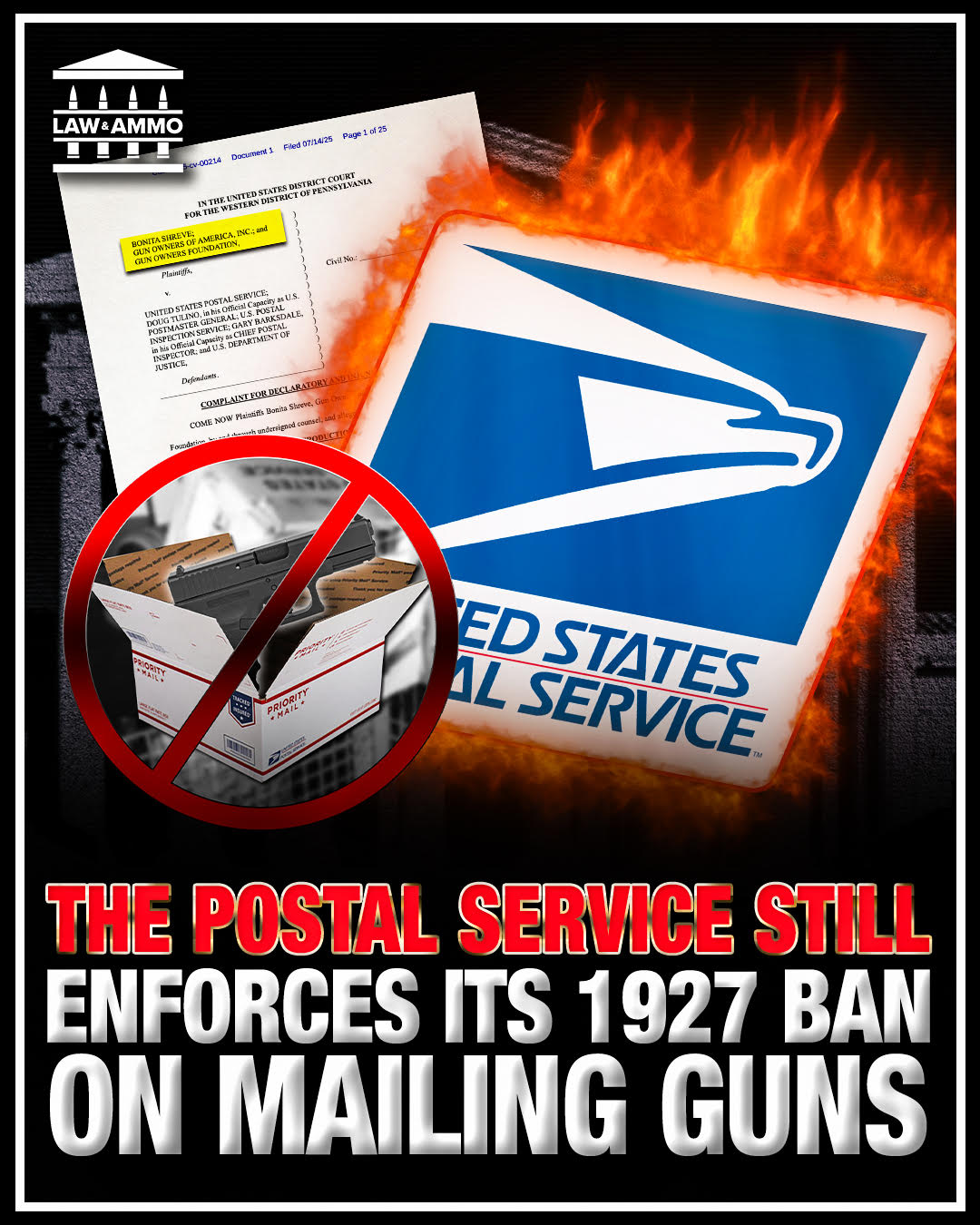
USPS Still Blocking Handgun Shipments Despite Court Loss
A federal court ruled against the U.S. Postal Service's century-old ban on mailing handguns. Gun Owners of America secured the victory. But USPS isn't complying—it's installing new barriers instead. The agency is now using workarounds that effectively preserve the old rule. Gun owners face the same practical prohibition despite winning in court. Immediate action is required to force full enforcement of the ruling.
Key Details
- Gun Owners of America obtained a court order forcing USPS to overturn its handgun mailing policy
- The original ban had been in place for approximately 100 years
- USPS responded by creating new restrictions designed to achieve the same outcome as the old rule
- The agency is not fully complying with the court's Second Amendment decision
- Gun owners must file complaints and escalate pressure to force actual compliance
Why It Matters for Gun Owners
This ruling affects interstate firearm sales and transfers. Many licensed dealers and private sellers use mail delivery for handgun shipments. The USPS monopoly on mail service means no alternative exists if the agency blocks packages. Businesses and individuals in every state face shipping delays or denials. A compliant USPS would restore a practical sales channel. Right now, the court won but the carrier still controls the outcome. Gun owners in states with restrictive FFL networks are hit hardest. Filing formal complaints with USPS and escalating to the Postal Regulatory Commission forces accountability.
DownRange Analysis
Winning a case doesn't mean winning enforcement. USPS is doing what bureaucracies do—finding creative non-compliance. The court issued an order; the Postal Service is gaming the margins. This is exactly why Second Amendment rights require constant vigilance. A ruling that looks good in the courtroom means nothing if the agency ignores it. Gun owners cannot accept half-measures. Every restriction USPS props up should trigger formal challenges. The court already sided with us. Now we need to make them side with us again by forcing real compliance, not paper-thin workarounds.