After Years Carrying Falco, Here's What Actually Works
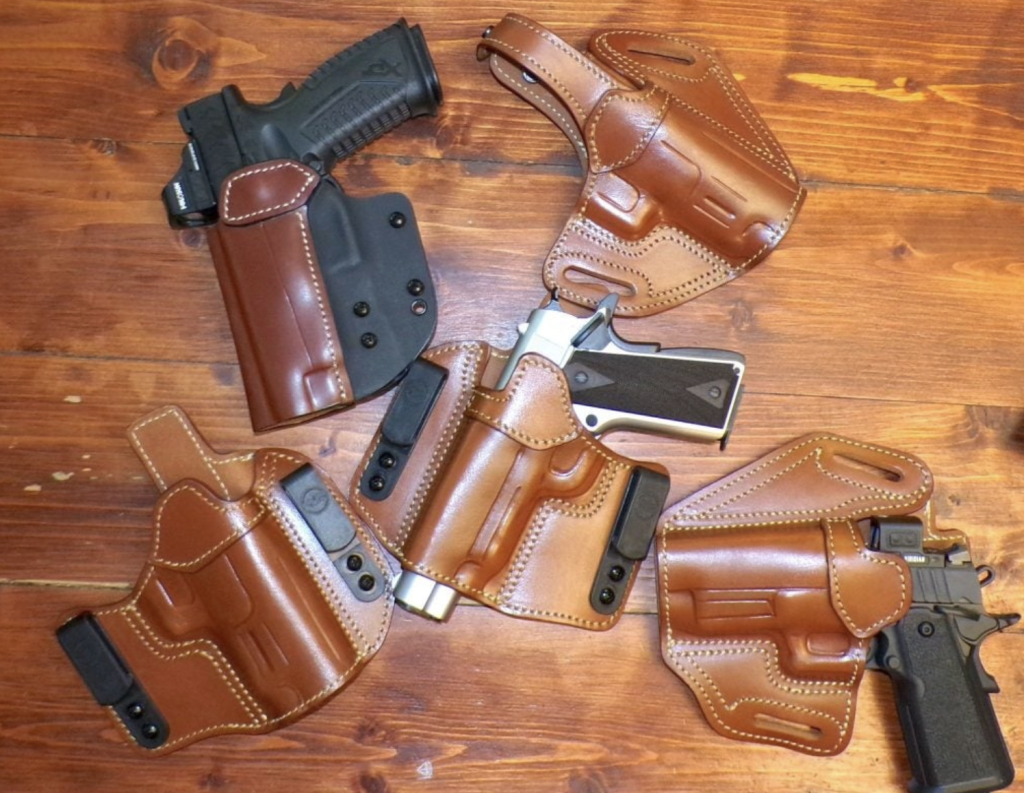
A shooter who spent years carrying Falco holsters examined six leather and hybrid models built for 1911, 2011, and Springfield XDM Elite 10mm pistols. The evaluation cuts through marketing noise to reveal which designs earn daily carry duty.
Falco builds holsters in Poland using leather construction that handles real-world use. The test included both traditional leather designs and hybrid models pairing leather with kydex backing. Prices range from $80 to $150 depending on model and customization options.
For the 1911 platform, Falco offers two primary designs. The traditional pancake holster delivers classic lines with modern retention. Leather breaks in fast—usually two weeks of consistent carry before reaching optimal draw speed. The hybrid 1911 model adds kydex reinforcement around the trigger guard, improving retention without sacrificing accessibility. Both fit standard and compact frames reliably.
The 2011 (double-stack 1911 platform) requires different geometry. Falco's 2011 specific models account for the wider grip and different sight radius. The leather molds to the gun quickly, but retention stays firm throughout the break-in period. Users report consistent draw times after 30 days of carry.
Springfield's XDM Elite 10mm presented the toughest test. The recoil-heavy cartridge demands secure retention. Falco's XDM-specific hybrid model uses bonded leather with kydex reinforcement at critical stress points. The design prevents the gun from shifting during heavy recoil or dynamic movement. After six months of daily carry, the holster showed zero movement or wear issues.
Why It Matters for Gun Owners
Holster quality directly impacts safety and reliability. A poor holster causes negligent discharge risk, slow draws during self-defense situations, and accelerated gun wear. Falco's traditional leather approach means your holster improves with use rather than degrading.
Break-in time matters for real carriers. Quality leather holsters require two to four weeks before reaching optimal draw speed. During this period, the leather conforms to your specific gun's geometry. Falco leather tolerates this break-in without developing wear cracks or separation.
Hybrid models offer middle ground. Kydex backing prevents leather from collapsing into the trigger guard—critical for retention safety. The leather facing remains comfortable against skin or clothing during 12-14 hour carry days. This matters for anyone carrying daily without a second gun or backup holster.
Price positioning places Falco in the accessible-but-quality tier. Mass-produced holsters cost $40-60. Premium USA brands charge $150-250. Falco delivers European craftsmanship at mid-market pricing. For daily carriers rotating between multiple guns, this value matters.
Background
Falco established production in Poland, focusing on leather craft rather than industrial mass production. The company serves both civilian and law enforcement markets. Their reputation centers on consistent quality rather than fashion-forward designs.
Leather holsters have seen renewed interest after years of kydex dominance. Modern shooters recognize that leather durability exceeds expectations when properly constructed. Falco's longevity reputation comes from actual users carrying for years, not marketing claims.
The 1911 remains popular among competitive and defensive shooters. Double-stack variants (2011s) gained traction in IPSC competition, driving aftermarket holster demand. Springfield's XDM line attracts serious shooters seeking reliable polymer designs. Falco's model diversity addresses this actual market demand.
DownRange Bottom Line
Falco holsters earn their reputation through use, not hype. The leather breaks in fast, the retention holds secure, and the price stays reasonable. For 1911, 2011, or 10mm carriers who value proven gear over trendy alternatives, Falco delivers. Order early—quality production moves slower than factory plastic holsters, but the results justify the wait.