H&K MP5 Remains the Gold Standard Since 1966
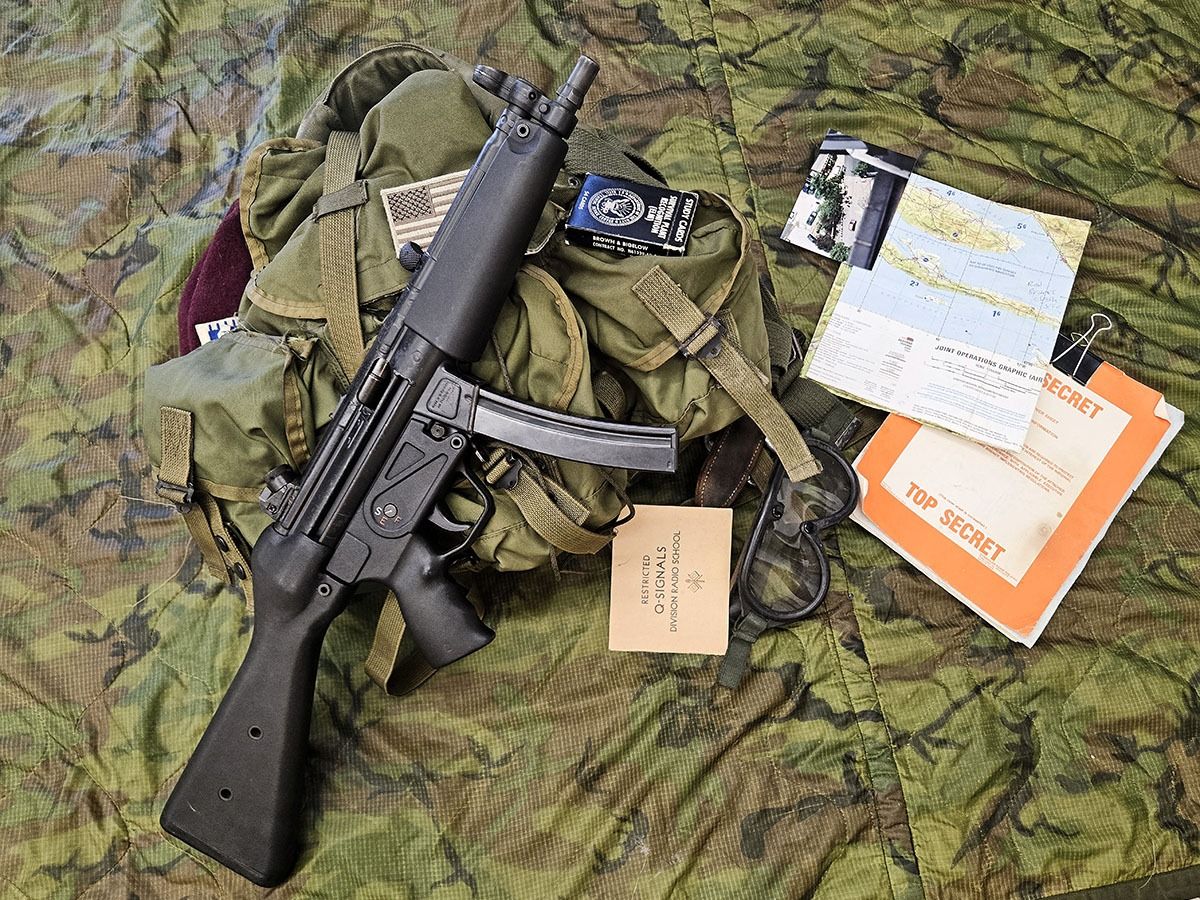
The Heckler & Koch MP5 has spent 60 years as the preferred submachine gun for elite military and law enforcement units worldwide. First introduced in 1966, this 9mm platform outlasted countless competitors through reliable design and modular capability. Every major special operations unit—from SEAL Team Six to Germany's GSG 9—trusts the MP5 for close-quarters battle, hostage rescue, and armed security details.
The MP5 fires 9mm NATO ammunition. Its closed-bolt, roller-delayed blowback system delivers accuracy that defies its compact size. Suppressors integrate seamlessly with the platform. Tactical accessories mount via picatinny rails on modern variants. Current civilian-legal options from Tennessee-based HK USA run $2,200-$3,000 depending on configuration.
Why It Matters for Gun Owners
The MP5's longevity teaches a critical lesson: simplicity beats complexity. No gas piston. No over-engineered internals. A carrier considering a 9mm carbine gains access to proven ergonomics tested in actual combat zones across six decades. Training resources exceed nearly every other platform—online videos, published manuals, and tactical courses abound.
Ammunition costs matter for daily practice. 9mm NATO runs significantly cheaper than 5.56 or .300 Blackout. A shooter can train more frequently, building genuine skill rather than spending discretionary funds on exotic calibers. The MP5's low recoil impulse aids follow-up accuracy, especially critical in home defense scenarios where overpenetration risks exist.
Modularity extends platform lifespan. A shooter buys one lower receiver and swaps uppers for different roles: 8-inch PDW configuration for vehicle storage, 16-inch rifle for range training, or pistol variant for backup duty. Parts compatibility spans decades. A 1975 MP5 lower accepts 2024 rail systems. That's genuine value preservation.
Legal status remains clear. The MP5 exists in civilian form as the HK94 platform, later refined as the SP5. No felony risk. No registration headaches in most states. It's a proper firearm, not a short-barreled rifle requiring NFA paperwork—unless your configuration drops below the 16-inch barrel legal threshold.
Background
Heckler & Koch developed the MP5 from the G3 battle rifle platform. Engineers retained the proven roller-delayed system while shrinking dimensions for submachine gun duty. West German special forces adopted it immediately. NATO militaries followed. Soviet forces never matched its reliability or accuracy profile.
The Cold War ended. The MP5 kept working. Counter-terrorism operations in the 1990s relied on it. Iraq and Afghanistan operations saw MP5s still in service. Police departments worldwide chose the MP5 over American designs because it worked harder and lasted longer.
Modern variants include the SP5, SP5K (short), and SP5L (carbine). Each maintains the essential roller-delayed system. Each accepts 30-round magazines. Each runs subsonic ammunition reliably—critical for suppressed applications where cycling reliability matters more than raw velocity.
Manufacturing complexity creates the high civilian price point. Roller-delayed systems demand precision machining that mass-market competitors skip. You pay for 60 years of refinement and warranty support from a German company that stands behind its products.
DownRange Bottom Line
The MP5 isn't fashionable in every gun club. AR-15 adherents dominate online forums. But serious professionals still choose the MP5 when shots must connect and reliability cannot fail. A daily carrier considering a 9mm option gains access to the platform that trained every major special operations unit since 1966. That's not hype—that's 60 years of proven performance in actual combat. If your budget allows, the SP5 offers real capability that holds value and performs above its price tier.