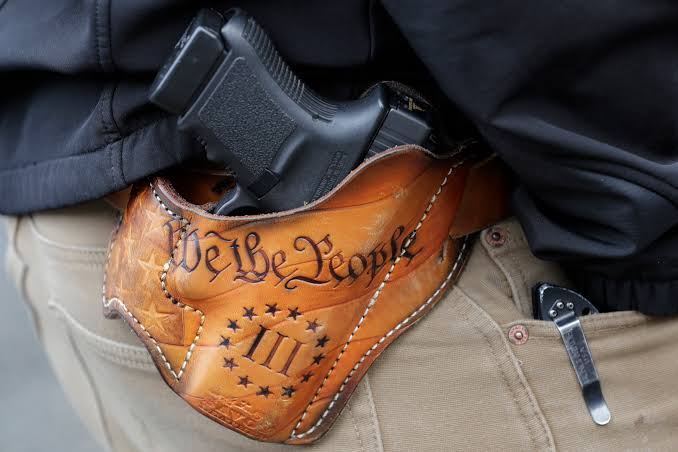
NRA Files Supreme Court Brief Against Illinois, Connecticut Assault Weapon Bans
The National Rifle Association filed an amicus brief Friday challenging Cook County's local ordinance and Connecticut's statewide assault weapons ban before the U.S. Supreme Court. The consolidated cases—Viramontes v. Cook County and Grant v. Higgins—directly target two of America's most restrictive firearm regulations. The Independence Institute and American Suppressor Association joined the NRA's filing, coordinating Second Amendment litigation that could strike down bans affecting 8.6 million residents across Illinois and Connecticut.
Both jurisdictions prohibit AR-15s, AK-pattern rifles, and standard-capacity magazines over 10 rounds. Connecticut enforces its ban statewide across all 3.6 million residents. Cook County's ordinance covers approximately 5 million people in the Chicago metropolitan area. The American Suppressor Association's involvement signals the brief addresses suppressor restrictions tied directly to these weapons bans.
Why It Matters for Gun Owners
A Supreme Court victory strips away two entrenched bans blocking semi-automatic rifle ownership. Gun owners in Cook County could legally purchase and carry AR-15s and AK platforms currently prohibited under the ordinance. Connecticut residents would gain access to firearms the state classified as "assault weapons" for the past two decades.
The ruling's precedent extends beyond these two jurisdictions. New York, California, Massachusetts, New Jersey, and Hawaii maintain similar bans facing identical constitutional challenges post-Bruen. A favorable decision establishes binding legal principle: assault weapons bans cannot survive scrutiny under the Supreme Court's 2022 Bruen framework, which requires gun regulations align with "the nation's historical tradition of firearm regulation."
The suppressor angle matters operationally. Connecticut's ban tied suppressor restrictions to its assault weapons prohibition. If the Court strikes the ban, suppressors face weaker legal standing for continued restriction. Daily carriers in restricted states gain practical pathways to legally own the rifles they've trained with and trust.
Background: Bruen Changes the Legal Field
The Supreme Court's 2022 Bruen decision fundamentally shifted assault weapons litigation. Before Bruen, courts applied "means-end scrutiny"—asking whether bans achieved legitimate government interests. This standard allowed judges to defer to lawmakers' claims that banning AR-15s reduced gun violence.
Bruen replaced this with historical analysis. Judges now ask: Did the Founding Era recognize similar firearm regulations? If not, modern bans fail constitutional review. This framework gutted the rationale behind assault weapons bans. Semi-automatic rifles existed in 1791 (Spencer repeating rifles). Standard-capacity magazines were common historically. The bans cannot point to founding-era equivalents.
Cook County enacted its ordinance in 2013, claiming certain rifles posed unique public safety threats. Connecticut passed its ban in 2013 following the Sandy Hook shooting. Both jurisdictions argued bans reduced mass shooting deaths. Under Bruen, these rationales don't matter. The historical tradition test controls.
Previous Supreme Court cases established the Second Amendment protects commonly owned firearms. AR-15s now exceed 20 million civilian ownership in America. They are definitionally "commonly owned" for lawful purposes. Bruen's logic suggests bans fail.
DownRange Bottom Line
The NRA's amicus brief gives the Supreme Court three major gun rights organizations pressing unified constitutional argument. Cook County and Connecticut face genuine risk of losing their bans. A favorable ruling opens AR-15 ownership to millions of currently restricted gun owners while establishing precedent crushing similar bans nationwide. This case determines whether assault weapons bans survive Bruen. The briefs suggest they won't.