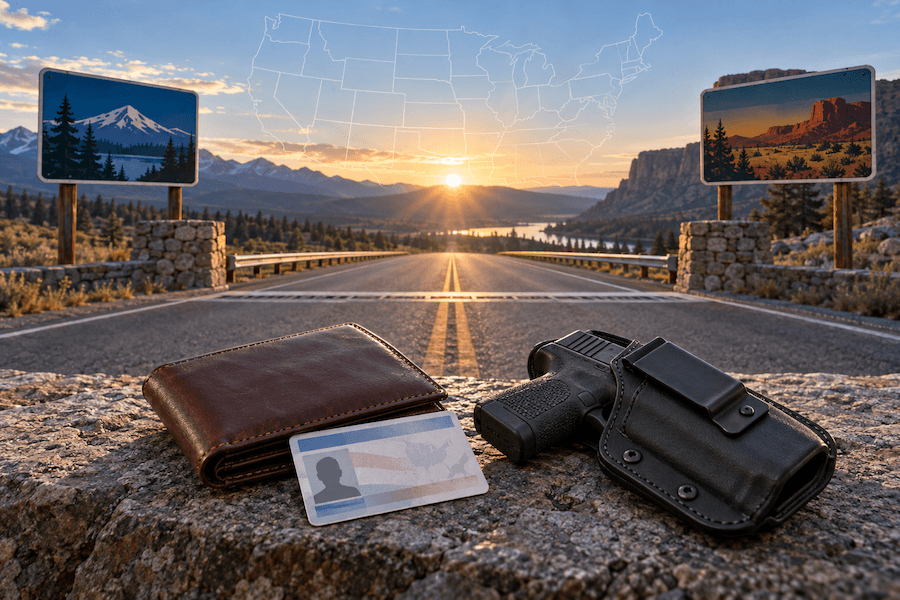
SAF Demands Supreme Court Blow Up State Carry Permit Maze
The Second Amendment Foundation filed an amicus brief Tuesday in Johnson v. Jacobson, urging the Supreme Court to hear the case and rule that states must recognize carry permits issued by other states. The filing directly challenges the current system where gun owners face different legal requirements and permit recognition across state lines—a fragmented approach that effectively blocks Second Amendment exercise across borders.
Key Details
SAF's intervention comes as the case moves through the federal courts, with the organization arguing that permit reciprocity should operate like driver's licenses: a license valid in one state remains valid in all others. The brief targets the practical absurdity of the current system where:
- A concealed carry permit issued by one state may be rejected by neighboring states
- Gun owners must research and comply with vastly different permit standards, processing times, and renewal cycles
- Constitutional carry states and permit-required states create legal tripwires for interstate travel
Why It Matters for Gun Owners
The current permit landscape punishes interstate lawful carry. A resident of Vermont holding constitutional carry status loses that protection crossing into New York. A Pennsylvania permit holder cannot legally carry in New Jersey without that state's separate permission. Gun owners currently must either avoid certain states, apply for multiple permits at multiple agencies, or carry unlawfully and risk felony charges. A Supreme Court ruling requiring reciprocity would eliminate this compliance trap overnight. Millions of gun owners in permit-required states would gain immediate mobility across state lines—no new paperwork, no state-by-state applications, no legal gray zones. This particularly impacts competitive shooters, hunters, and travelers who cross state lines regularly.
DownRange Analysis
SAF's strategy uses Bruen's text-and-history framework by arguing that permit reciprocity aligns with the Second Amendment's core right to bear arms and has historical roots in interstate commerce protections. The Court's recent trend—particularly after Bruen—suggests receptiveness to arguments that state regulations cannot effectively nullify constitutional rights at borders. However, this case also invites federalism pushback: states will argue permit standards reflect local public safety determinations. Realistically, the Court could split the difference, mandating recognition of permits while allowing states to set their own issuance standards. For gun owners, SAF's brief signals that reciprocity is no longer a political compromise—it's becoming a constitutional demand. Start tracking Johnson v. Jacobson's docket status. If the Court takes it, expect oral arguments within 18 months and a ruling that reshapes how America handles interstate carry.