SAF Challenges Maryland's Glock Ban With Emergency Injunction Filing
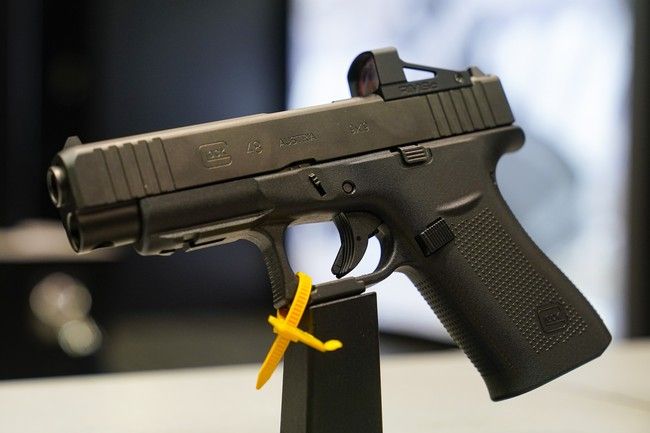
The Second Amendment Foundation filed for an emergency injunction against Maryland's handgun restrictions that functionally ban Glock's complete lineup from the state. The ban mirrors Connecticut's approach and removes one of America's most common defensive pistols from retail shelves. The legal challenge questions whether Maryland's restrictions withstand scrutiny under the Supreme Court's Bruen decision.
Key Details
- Maryland law effectively prohibits Glock's entire handgun catalog, mirroring Connecticut's model-specific restrictions
- The ban targets semi-automatic handguns regardless of manufacturer—most gunmakers produce alternative models, but Glock's dominance in that category pushes it toward complete market removal
- SAF argues the restriction lacks constitutional grounding, pointing to minimal empirical connection between banned models and crime rates
- The injunction filing signals SAF anticipates rapid legal movement rather than extended preliminary hearings
Why It Matters for Gun Owners
Maryland gun owners lose access to one of the most reliable, affordable, and widely-carried defensive pistols on the market. Competitive shooters relying on Glock platforms for USPSA, IDPA, or local matches face equipment restrictions that don't exist in neighboring states. The ban's expansion beyond Connecticut suggests a coordinated blue-state strategy—if Maryland's ban survives judicial review, expect similar legislation in Massachusetts, New York, and California. Gun owners in these states should monitor the injunction outcome closely; a favorable preliminary ruling could halt enforcement while litigation continues.
DownRange Analysis
Bruen created an historical-tradition test that Maryland's restrictions will struggle to clear. The state must prove that banning specific handgun models has historical analogues in American gun law—a task that crumbles under scrutiny. Glock pistols have been standard-issue for law enforcement and civilian carry for decades without causing the statistical spike Maryland's law implies. The injunction filing suggests SAF believes the preliminary injunction threshold—likely irreparable harm and likelihood of success on the merits—favors blocking enforcement immediately. Gun owners should expect quick judicial movement. If this injunction holds, Maryland's ban becomes effectively unenforceable before trial. If it fails, prepare for a long appellate fight extending into 2027.