Secret Service Kills Armed Attacker at White House Security Checkpoint
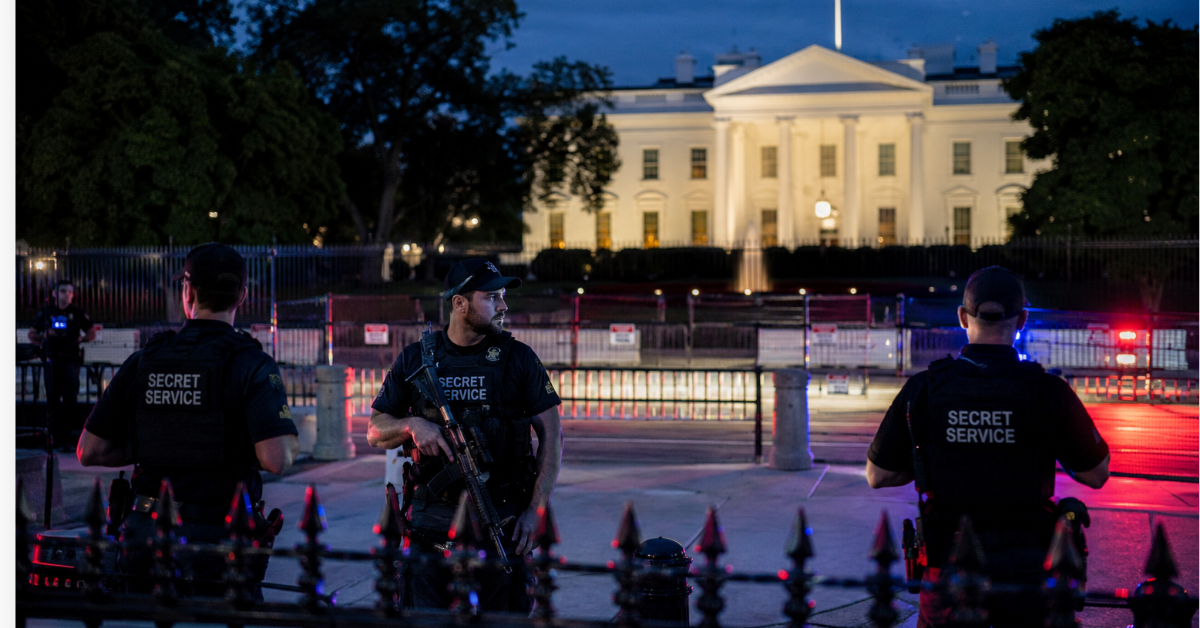
The U.S. Secret Service fatally shot Nasire Best on Saturday evening, May 23, 2026, after he approached a security checkpoint outside the White House and opened fire on officers. Returning fire within seconds, uniform division agents neutralized the attacker at the intersection of 17th Street and Pennsylvania Avenue NW, protecting President Donald Trump, who was inside the residence at the time. The shooting occurred at approximately 8:30 PM as Best approached the northwest security perimeter and began firing at Secret Service personnel manning the checkpoint. Officers immediately returned fire, striking Best multiple times and ending the threat within approximately 15 seconds of the initial shots fired.
Background and Context
White House security incidents involving firearms have escalated in frequency over the past decade, with the Secret Service adapting protocols following previous breaches. The 2014 fence jumper incident and subsequent security reviews led to enhanced perimeter defenses and stricter engagement rules for uniformed division officers. The Secret Service operates under Title 18, Section 3056 of the U.S. Code, which grants agents broad authority to use deadly force when protecting the President and White House grounds. Recent threat assessments have identified increasing risks to executive protection, particularly involving lone wolf attackers. The agency maintains a zero-tolerance policy for armed approaches to secure perimeters, with officers authorized to engage immediately upon identification of weapons. This incident marks the first fatal shooting at a White House checkpoint since 2016.
What This Means for Gun Owners
This incident reinforces the absolute prohibition on firearms within the White House security zone, which extends several blocks in all directions from the executive mansion. Federal law under 18 U.S.C. § 930 prohibits firearms in federal facilities and grounds, with White House restrictions being among the strictest in the nation. Gun owners visiting Washington D.C. must navigate the district's may-issue concealed carry laws, which remain highly restrictive despite recent court challenges. The shooting demonstrates the immediate and lethal response protocol for any armed approach to federal security perimeters. Legal gun owners should note that even valid carry permits from other states provide no protection in federal security zones, and attempting to enter such areas while armed constitutes a federal felony regardless of intent.
Industry Impact
The National Rifle Association has not yet issued a statement on the incident, though the organization consistently supports law enforcement's right to self-defense and protection of government officials. Gun Owners of America and the Second Amendment Foundation typically focus on the distinction between lawful carry and criminal activity in such cases. Security industry manufacturers may see increased demand for perimeter detection systems and non-lethal deterrent technologies following high-profile incidents. The shooting will likely prompt congressional discussions about executive protection funding and capabilities. Federal law enforcement training programs may reference this incident as a textbook example of proper threat response protocols. Private security firms often study Secret Service engagements to refine their own defensive procedures.
What to Watch Next
The Metropolitan Police Department will conduct an independent investigation of the shooting, standard protocol for all officer-involved incidents in Washington D.C. The Department of Homeland Security Inspector General will also launch a separate review of Secret Service procedures and response times. Congressional oversight committees, particularly the House Committee on Oversight and Reform, may schedule hearings on White House security protocols within the next 30 days. The U.S. Attorney's Office for the District of Columbia will determine whether the shooting was justified under federal law, though such determinations typically take 60-90 days. Security footage and ballistics evidence will undergo analysis by the FBI Crime Lab. The Secret Service will likely release additional details about the timeline and weapons involved within one week.
DownRange Bottom Line: The Secret Service did exactly what they're trained to do when someone opens fire at the White House. This wasn't about gun rights or carry laws - it was about a criminal attacking federal officers who responded appropriately. Gun owners should remember that our Second Amendment rights come with the responsibility to respect security perimeters and federal law.