Hawaii's Second Amendment Problem: Self-Defense Data Ignored
Gun owners in Hawaii operate under some of the nation's strictest carry and ownership laws, yet they rely on the same fundamental right as Americans everywhere: armed self-defense. Every day across the United States, civilians deploy firearms for protection—drawing on an assailant, confronting an intruder, or stopping a threat—without firing a shot and without making headlines. Hawaii's legal framework treats this everyday reality as irrelevant, creating a disconnect between constitutional rights and the state's regulatory approach.
Key Details
- Most defensive gun uses in America go unreported and never reach news coverage.
- These incidents typically end with the gun owner drawing the firearm, deterring the threat, and continuing their day—no shots fired, no police call.
- Self-defense against animals and property threats also constitute legitimate defensive gun use under the Second Amendment.
- Hawaii's carry permitting system ranks among the most restrictive in the nation, with few citizens obtaining licenses for daily carry.
Why It Matters for Gun Owners
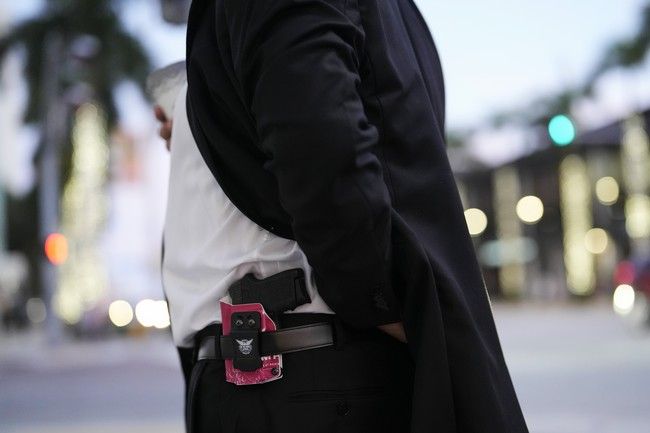
Hawaii residents face a stark reality: the right to carry a firearm for self-defense—recognized by the Supreme Court in New York State Rifle & Pistol Association v. Bruen—is functionally unavailable to most citizens. When self-defense happens thousands of times daily across America without media coverage or public attention, it becomes the invisible foundation of the Second Amendment. Gun owners in Hawaii are excluded from this protection. Those living there cannot legally carry for self-defense with the ease available to residents of constitutional carry states. Hunters, homeowners, and those who work alone in remote areas face additional burdens. This matters because Bruen established that denying carry licenses in public contradicts the Constitution—and Hawaii's permitting structure does exactly that for the vast majority of applicants.
DownRange Analysis
Hawaii's legal resistance to Second Amendment rights ignores empirical reality. If millions of Americans use firearms defensively each year—most without incident, media attention, or legal consequence—then the state's argument that carry poses an unmanageable public safety risk collapses. Bruen requires states to prove that restrictions serve substantial public interests and are consistent with historical tradition. Hawaii cannot demonstrate that denying carry licenses to law-abiding citizens meets that standard when the evidence shows defensive carry works. The state should either reform its permitting process to align with constitutional carry principles or face federal litigation it will likely lose. For Hawaii gun owners, this case remains a test of whether Bruen's language translates into real-world access to Second Amendment rights—or remains theoretical.