Revolver Reliability Outweighs Magazine Capacity Trade-Off for Daily Carriers
Revolvers dominate concealed carry despite holding fewer rounds than semi-automatics. Gun owners choose wheelguns for their mechanical simplicity, proven reliability, and instant readiness—factors that matter more than round count in defensive scenarios.
The revolver's appeal starts with basic mechanics. No magazines fail. No rounds fail to feed. Pull the trigger; the gun fires. Semi-automatics demand magazine maintenance, proper feeding technique, and regular function testing. A revolver sits loaded and ready for years without intervention.
Why It Matters for Gun Owners
Daily carriers face hard choices about trade-offs. A five-shot .357 Magnum revolver carries three fewer rounds than a compact 9mm semi-automatic. That math seems one-sided until you consider real-world defensive encounters.
Most armed self-defense events end within three shots. The gunfight statistic doesn't change: average engagement distance runs 7 yards; average round count stays under five. A revolver with six rounds of .38 Special or .357 Magnum covers that reality.
Revolver users eliminate mental overhead. No slide manipulation concerns. No manual safety worry. Point and press the trigger—muscle memory simplifies to one action. Semi-automatic owners train the draw, the grip, the presentation, and the safety manipulation. Revolvers demand only the draw and the press.
Size matters for appendix carry and deep concealment. Compact revolvers measuring 6.5 inches overall and weighing 15 ounces disappear inside waistbands. They pocket-carry in vehicles without printing. They fit ankle holsters for backup carry. This accessibility increases carry frequency—and carrying beats leaving the gun home.
Weather and neglect test weapons differently. A revolver exposed to salt water, mud, or sand still functions. The cylinder seals the action. A semi-automatic's slide-to-frame gap collects contaminants that cause malfunctions. Professional shooters know this. Military units know this. Law enforcement knows this.
Background
Revolver design hasn't fundamentally changed since 1873. The Colt Single Action Army introduced the swing-cylinder mechanism that modern wheelguns still use. Double-action revolvers emerged in the 1880s, and that design dominates defensive carry today.
Semi-automatic pistols entered service in 1911. They offered increased capacity and faster reloads. For 110 years, the industry assumed semi-automatics would replace revolvers entirely. That prediction failed.
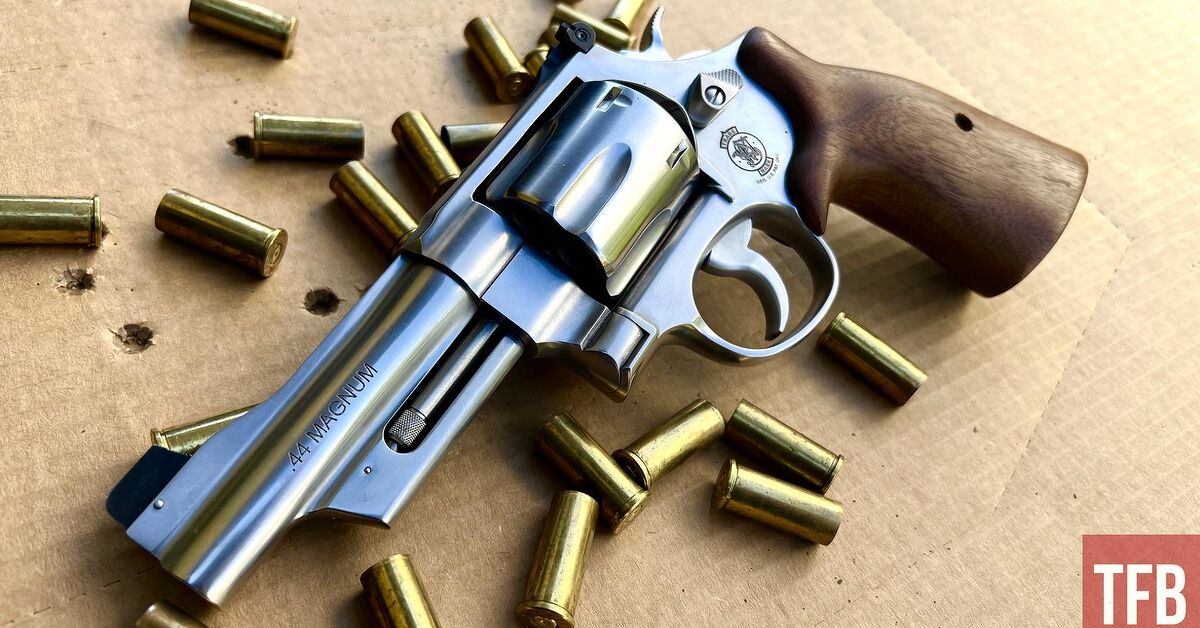
Today's revolver manufacturers include Ruger, Smith & Wesson, Taurus, and Kimber. Ruger's Security-Six series and SP101 offer affordable duty-grade reliability. Smith & Wesson's K-frame and L-frame revolvers set the standard for defensive wheelguns. Taurus produces budget alternatives without sacrificing function.
Modern ammunition improved revolver capability. Federal's .357 Magnum loads deliver 1,450 feet per second from 3-inch barrels. Speer Gold Dot .38 Special rounds perform reliably from snub-nose guns. Ammunition quality no longer limits revolver effectiveness.
DownRange Bottom Line
Revolvers remain relevant because they solve real problems. A defensive gun sitting in a nightstand must fire when needed. A backup gun in a pocket must work after two years of neglect. A duty gun carried through coastal weather must function after salt exposure.
Capacity arguments miss the point. Five good rounds beat eight unreliable rounds. Mechanical certainty beats potential complexity. Shooters choosing revolvers choose proven systems—and that choice deserves respect, not dismissal.
The revolver isn't obsolete. It's specialized. Own what works for your role, your environment, and your training. For many shooters, that gun has a cylinder.