Suppressor Walking Loose? Four Causes, Four Fixes, Zero Mystery
Four mechanical problems explain nearly every suppressor that drifts off its threads. Each one moves your point of impact, erodes accuracy, and can set up a baffle strike if you ignore it. The fixes cost little and take minutes at the bench. Every shot sends a shock wave through the rifle, and the threaded joint absorbs it. A mount that seated tight at sunrise can feel sloppy by lunch. Semi-automatic rifles and heavy-recoiling cartridges show this problem most, but a bolt-action .243 is not immune. The good news is that the causes are predictable, and so are the solutions.
Key Details
The author frames a loose can as more than an annoyance. Here are the specific points that matter:
- Point of impact: A loose suppressor can sit slightly out of alignment with the bore, shifting where your rounds land.
- Baffle strike: A bullet hitting internal baffles can damage the suppressor, destroy the muzzle device, and throw fragments in unexpected directions.
- Recoil cycling: Cumulative energy rattles through the threads round after round, loosening the connection over a session.
- Heat cycling: A suppressor and its muzzle device often use different alloys. They expand at different rates, so the joint can shift as the can heats and cools.
- Fouling: Carbon, powder residue, and grit on the threads can feel tight on the bench, then compress or shift under fire.
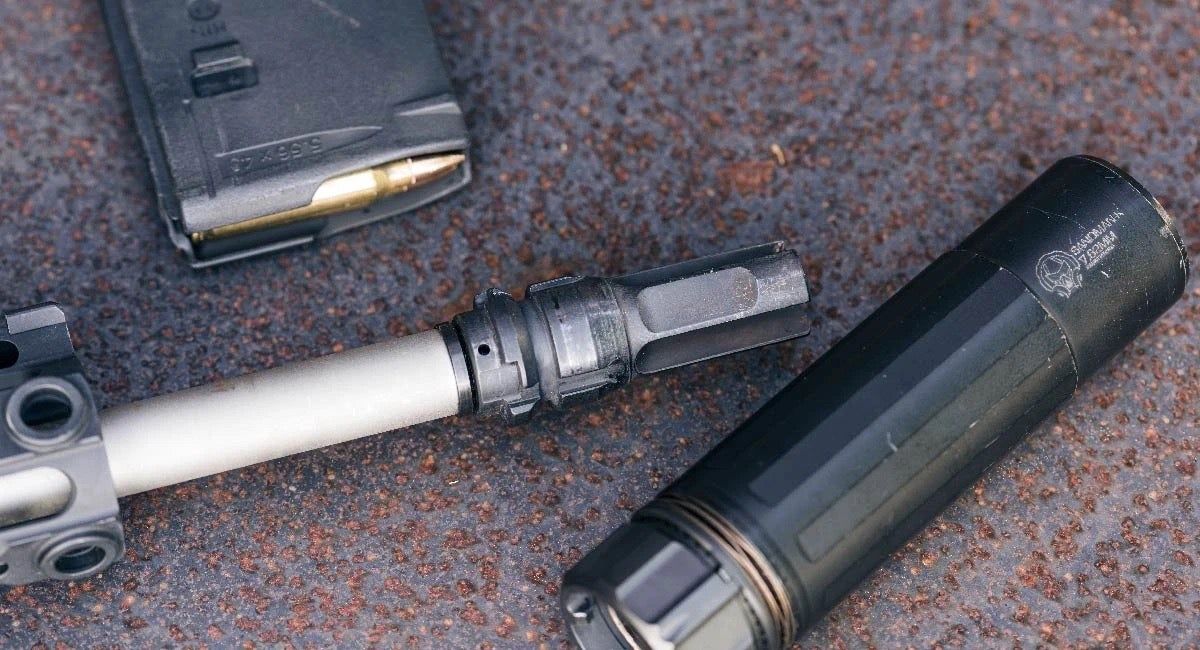
- Mount wear and tolerance: Thread tolerances vary between manufacturers. A poorly cut shoulder, stripped thread, or flat spot will not seat squarely. Cheap adapters cause many failures.
- Seating check: The mount shoulder should sit flat against the suppressor face with no visible gap.
- Alignment check: Run a clean dowel or alignment rod through the bore and suppressor. If it catches, stop and investigate before firing.
- Direct thread cans: Tighten firmly by hand. Overtightening makes removal hard after heat soak and does not fix the root cause.
- Quick-detach mounts: Follow the maker's torque or lever instructions for the locking collar.
- Thread prep: Clean both the barrel or device threads and the suppressor threads with solvent and a rag. A nylon brush or dental pick clears buildup.
- Thread compounds: A thin film of high-temperature anti-seize aids consistent torque. PTFE or plumber's tape on barrel threads also reduces walk-off, but it must stay off the shoulder and muzzle, must withstand suppressor heat, and must be approved by the suppressor maker.
Background
Suppressors have been regulated under the National Firearms Act since 1934. For decades, buyers paid a $200 tax stamp and waited on ATF approval before taking possession. That paperwork kept the cans rare for generations, and it also kept manufacturers and shooters focused on quality. Suppressor mounting has never been standardized across the industry. Common muzzle thread pitches such as 1/2x28 and 5/8x24 exist, but tolerances, shoulder geometry, and thread depth differ between makers and between generations of the same product. A mount that fits one can may leave a gap on another. Shooters who swap cans between rifles or buy used equipment run into this mismatch often. The mechanics of threaded joints have not changed. What changed is the volume of people running suppressors on everything from pistols to precision bolt guns, which put more mismatched hardware in the field.
Why It Matters for Gun Owners
Anyone running a suppressor on a rifle or pistol should treat this as a routine maintenance item. Hunters are the most exposed group. A can that drifts after you confirm zero can push a shot off target at distance, and a wounded animal does not care why. Precision shooters and competitors lose points and time when groups open up mid-match. Owners of quick-detach mounts face a different risk: a collar that feels locked may not be torqued to spec. Owners of direct-thread cans should check whether the barrel crown and thread shoulder meet the can's specs. If you buy a used suppressor, inspect the threads and baffle stack before you trust it. Replacing a worn mount costs far less than replacing a damaged can, and far less than replacing a muzzle device or repairing a barrel after a strike. Make the check part of your range bag routine.
DownRange Analysis
This is a maintenance problem, not a constitutional one. Bruen does not touch thread torque, and no court will rule on your mount shoulder. The legal stakes are still real, though. A baffle strike that sends debris toward a bystander turns a hardware failure into a liability question, and in a shooting-related incident, a documented maintenance lapse does not help your case. Treat the twist test as non-negotiable. Give the can a hand check before every string of fire and after every reload break. Pick one thread prep method, confirm that your suppressor maker approves it, and stick with it. Run a dowel check every time a can changes rifles. If a can keeps walking after you have clean threads, correct torque, and a flush-seating mount, stop shooting it and call the manufacturer. A gunsmith can confirm whether your barrel threads run square to the bore. Fix the hardware now, and the accuracy problem goes away.