A .30-Cal Can on Your 5.56 Rifle Trades Sound for Versatility
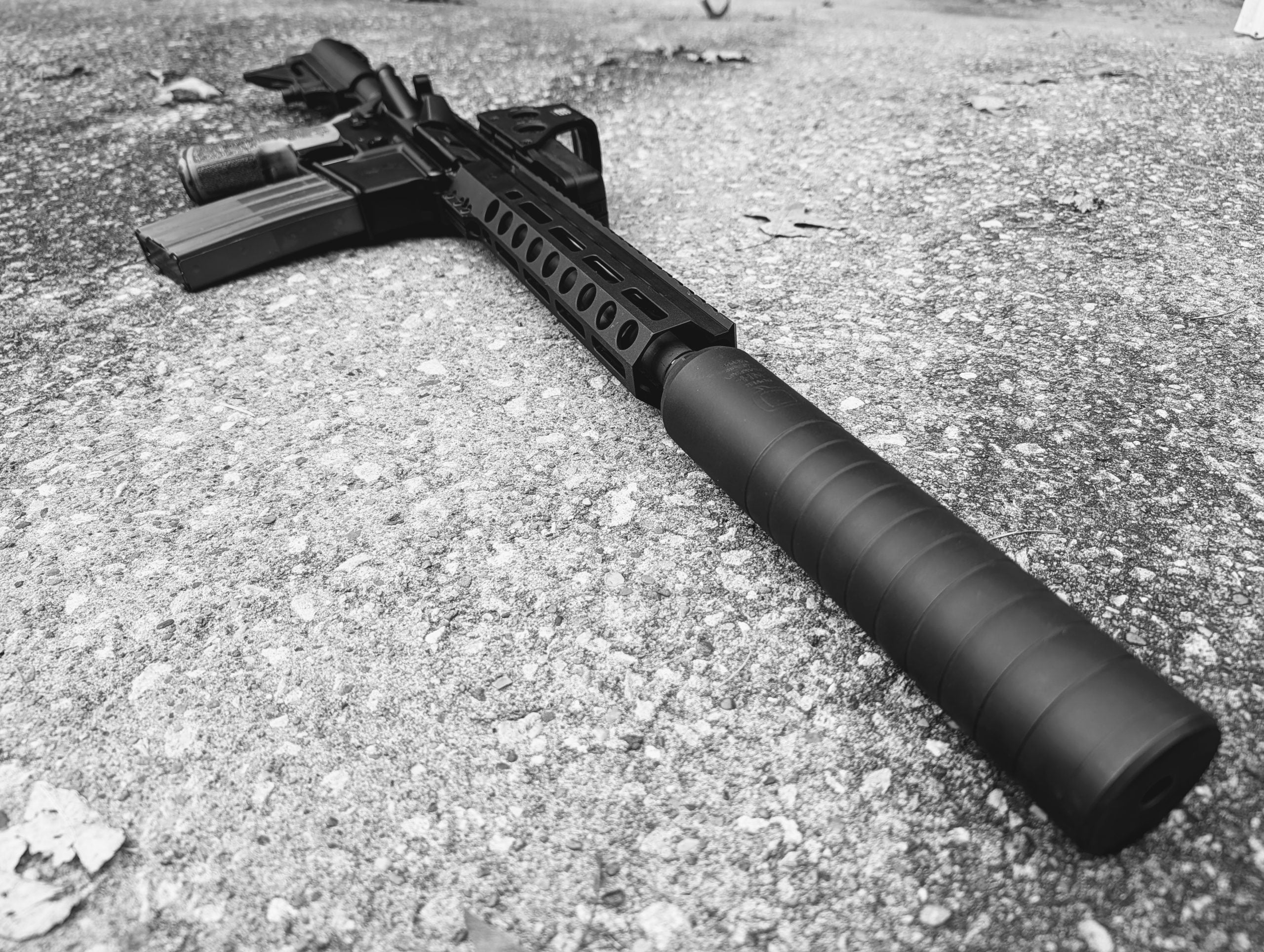
A .30-caliber suppressor will run on your 5.56 AR-15, and it will protect your ears. It will not match a dedicated 5.56 can on sound or flash reduction. The tradeoff comes down to weight, length, and how many rifles you plan to feed with one can. Most buyers face the same choice: one universal can that covers every rifle in the safe, or a purpose-built 5.56 suppressor that does one job better. Neither option is unsafe. Neither option makes a rifle silent. The right answer depends on the rifle you carry most and how much you care about the last few decibels.
Key Details
The core facts from the source break down into clear points you can check against your own setup:
- Caliber compatibility: A .30-cal can works on rifles chambered in 5.56 or .223 Remington. These cans are built for larger bullets and cartridges, often with more powder behind the projectile, so a 5.56 sits well inside their design envelope.
- Cartridge range: Most .30-cal cans also handle smaller diameters, including 6.5 Creedmoor and the popular PRC cartridges. The SilencerCo Omega 300 is cited as a common .30-caliber can that performs well on 5.56 rifles.
- Rimfire warning: A rimfire-rated can cannot handle 5.56 pressure, even though the bullet diameters match.
- Big-bore tradeoff: A .46-caliber can will suppress a 5.56 round, but it runs louder than a .30 because more open bore space lets sound escape.
- Rating check: Confirm the cartridges and barrel lengths listed in the owner's manual before you buy.
- Dedicated advantage: A matched can, such as a .223 bullet through a .223 bore, generally delivers better sound and flash reduction than a universal design.
- Weight and length: Multi-caliber cans use heavier, durable materials and often run longer. A dedicated 5.56 can usually saves weight and length, though material choice changes the math. A titanium .30-cal can may weigh less than a steel 5.56 suppressor.
- Thread pitch: Most 5.56 rifles use 1/2x28 threads, most .30-cal hosts use 5/8x24, and some European firearms use an unusual pitch. Each host needs the correct mount or adapter.
- Point of impact: Any suppressor adds muzzle mass that can shift impact and change group size. Shoot with and without the can, and re-zero with it attached.
Background
Suppressors fall under the National Firearms Act of 1934, which put them in the same regulatory category as short-barreled rifles and machine guns. Buyers have long filed ATF Form 4 approvals and paid the $200 transfer tax that the NFA set in 1934. That tax was reduced to zero for suppressors under federal legislation signed in July 2025, effective January 1, 2026, which cut the purchase cost for many buyers and pushed more shooters toward their first can. Cheaper entry means more people face the caliber question at the start. Early suppressor buyers often bought one can for one rifle. Today's buyer usually owns an AR-15 plus a bolt gun in .308 or 6.5 Creedmoor, and that mix drives the case for a universal .30-cal can. The gear market has responded with mounts and adapters for every thread pitch, which only adds to the cost of swapping cans between hosts.
Why It Matters for Gun Owners
If you run one AR-15 and nothing else, the calculation shifts toward a dedicated 5.56 can. Hunters and carriers feel the weight difference most. A long can on a 16-inch carbine moves the balance point forward, slows transitions, and wears on your support hand over a long day. Shooters with a mixed battery get the most value from a .30-cal can. One can covers the 5.56, the 6.5 Creedmoor, and a .308 without a mount swap at the bench. Range shooters who run multiple rifles in a session will feel the cost of swapping hosts, because each change means waiting for the can to cool, grabbing tools, and changing the mount. Owners in states with restrictions on suppressor use for hunting should check local rules before they buy a can for that purpose. Before any purchase, pull the manual, confirm the rating, and check the thread pitch on every host you own.
DownRange Analysis
Suppressor ownership does not run through Bruen. The Supreme Court's 2022 test in New York State Rifle and Pistol Association v. Bruen governs carry and arms-bearing questions, but suppressors sit under the NFA registration scheme, and that framework is the fight that matters here. The caliber choice is a hardware decision, not a legal one. Buy the can that matches how you shoot. My pick for a single-rifle carbine is a dedicated 5.56 can if sound and weight matter most. For a bench rifle, a hunting rifle, and an AR, a quality .30-cal can gives you the most coverage per dollar. Do three things now. Confirm the cartridge and barrel-length rating in the manual. Buy the correct mount for every host you plan to use. Shoot your rifle with and without the can, and re-zero before you trust it on a hunt.