
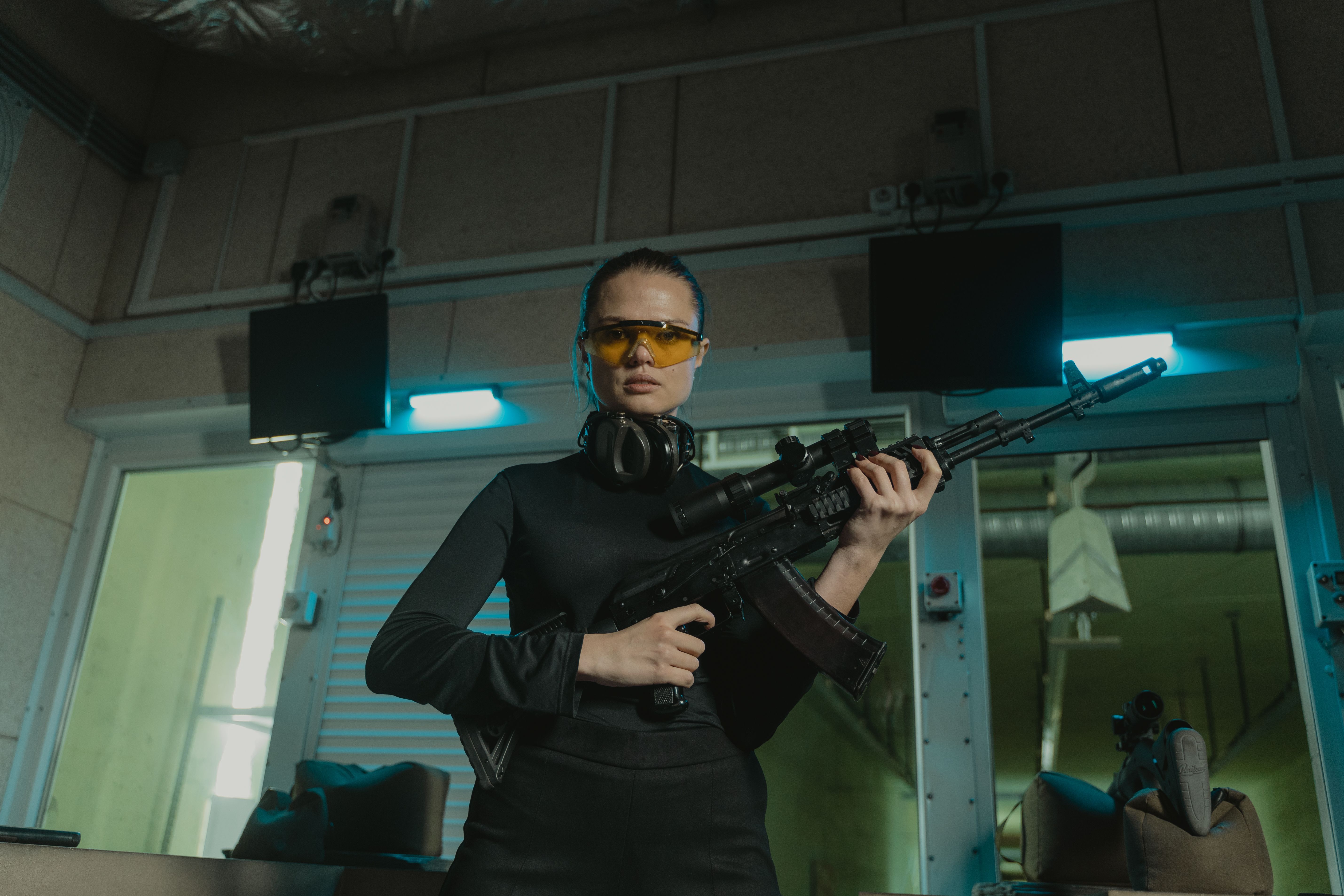

More women bought guns in 2025 than any previous year on record. The numbers are undeniable: women now represent roughly 32% of new gun purchases, up from 19% in 2019. That's not a trend. That's a demographic shift.
I've watched this change happen on the range. Five years ago, I'd see maybe one woman per shooting class. Now it's closer to four or five. And these aren't casual buyers picking up a .22 for fun. They're serious people buying defensive firearms, taking training courses, and committing to competency.
The gun industry scrambled to catch up. Some manufacturers got it right. Most didn't. And that matters, because the women buying guns today aren't forgiving of half-measures.
Why This Is Happening Now
The reasons are straightforward and have nothing to do with marketing campaigns.
First: actual threats. Women face documented risks that men don't. Intimate partner violence kills roughly 1,600 women per year in the U.S. That number doesn't move much. Sexual assault rates don't move much either. But awareness does. Information travels faster now. A woman in rural Montana can find out what happened to a woman in Austin in real time. She can see that restraining orders don't stop determined attackers. She can see that police response times in her county are 45 minutes. And she can make a rational decision about self-defense.
Second: the pandemic. Lockdowns, supply chain chaos, social unrest in 2020 and 2021—those years forced a lot of people to think about personal responsibility. Women weren't exempt from that thinking. Some bought guns out of fear. Some bought them because they realized no one else was coming to protect them. Both reasons are valid.
Third: social permission. Guns used to be "a guy thing" in mainstream culture, even though plenty of women owned them quietly. That stigma weakened. Female competitive shooters got visibility. Female gun instructors became normal instead of novelty. Women talking openly about carrying changed the conversation.
And fourth: other women told them to do it. Word of mouth is still the strongest sales channel. When your sister, best friend, or coworker carries a gun and isn't crazy about it—just matter-of-fact—that carries weight. No YouTube ad does that.
What The Industry Got Right
Some manufacturers understood the assignment.
Smith & Wesson didn't create a special pink gun or slap feminine branding on everything. They engineered the M&P9 Shield Plus and M&P380 Shield EZ with lighter slide racking force, lower bore axis, and ergonomic controls. Those features benefit everyone, but they matter significantly for people with less hand strength. It's engineering, not marketing.
Sig Sauer did similar work on the P365. The gun ships with a modular grip so it fits different hand sizes properly. That's not revolutionary, but it's thoughtful. And it works. The P365 became the best-selling defensive handgun in America across all demographics partly because it actually fits people with smaller frames.
Ruger's Security-9 Compact came out with the same engineering philosophy: smaller frame, lower flip, accessible controls. Again, these features help anyone. But they disproportionately benefit women, and Ruger built the gun that way intentionally.
Good ammunition companies got it too. Federal and Hornady didn't create special "women's ammo." They just kept making reliable defensive loads. That's correct. Women don't need special bullets. They need quality ammunition that works.
Training instruction got it right faster than I expected. Female instructors opened businesses. Organizations like the Womens Shooting Outdoors Foundation and the Well Armed Woman provided community and instruction without condescension. That mattered. A lot of women told me they wouldn't have stuck with shooting if their first instructor made them feel patronized or unsafe.
What The Industry Got Wrong
Then there's the embarrassing stuff.
Some companies decided "women's gun" meant making it smaller, pink, or decorated. Taurus released a small-frame revolver in hot pink. Smith & Wesson made pink grips and called it a women's line. That's not serving a market. That's insulting a market. Most women don't want a pink gun any more than most men want a teal one. They want a reliable tool in a color that doesn't matter.
Holster manufacturers were slow to catch up. For years, if you carried a compact 9mm and had a female body shape, good luck finding a quality IWB holster that worked. The market assumed women would carry small-of-back or off-body, both inferior options. Companies like Phlster and Vedder actually designed for different body types and ammunition placement. That should have been standard five years ago.
Marketing language was often condescending. Phrases like "designed for the modern woman" or "ergonomic for smaller hands" paired with stock photos of women squinting at guns. Real women found it ridiculous. One told me she walked out of a gun store when the clerk assumed she was buying her "husband's gun" for him.
Gun clubs and ranges were slow to welcome women shooters. Some still are. And that's lost revenue and lost community. A woman shows up to a public range, shoots carefully, asks good questions, and gets treated like she's a visitor instead of a customer. She doesn't come back. Her friends don't hear about it.
What's Happening With Training
Training demand from women is outpacing supply in some regions.
Quality defensive pistol courses are full. Most instructors I know say women are signing up at higher rates than men now, but they're not adjusting class size yet. That creates a gap.
Concealed carry classes vary wildly. Some states require training for permits. Women in those states get whatever the minimum is: eight hours, a basic demonstration, done. That's survival training, not competency training. A woman who takes a 16-hour force-on-force course with a serious instructor is fundamentally different from someone who spent a Saturday at the courthouse getting signed off. Both have permits. Only one is actually ready.
The good news: women are seeking out advanced training. They're taking carbine courses, force-on-force scenarios, tactical movement classes. They're not stopping at basic competency. That's a hard-earned win.
What Happens Next
If current trends hold, women will represent 35-40% of new gun purchases by 2028. That's not a guess. That's just following the line.
The industry will either adapt properly or it will leave money on the table. I'm betting on adaptation. Too many executives have daughters now.
What matters most is that new female gun owners stick with it. That means quality products, honest instruction, and communities that treat them as serious shooters instead of a demographic to be marketed to.
The women I see on ranges and in courses aren't there for novelty. They're there because they made a decision about their own safety. That's worth respecting, and it's worth getting right.
DownRange Bottom Line: Women buying guns at record rates is a real shift with real causes. The manufacturers and instructors who treat female shooters as customers who demand quality—not as a niche to be patronized—are winning. The ones still making pink guns and condescending marketing are losing. If you run a range, sell guns, or teach shooting, the market has already decided. Women are here to stay. Build for that reality or fall behind.