ATF Admits Fingerprints Useless, Drops Requirement for NFA Forms
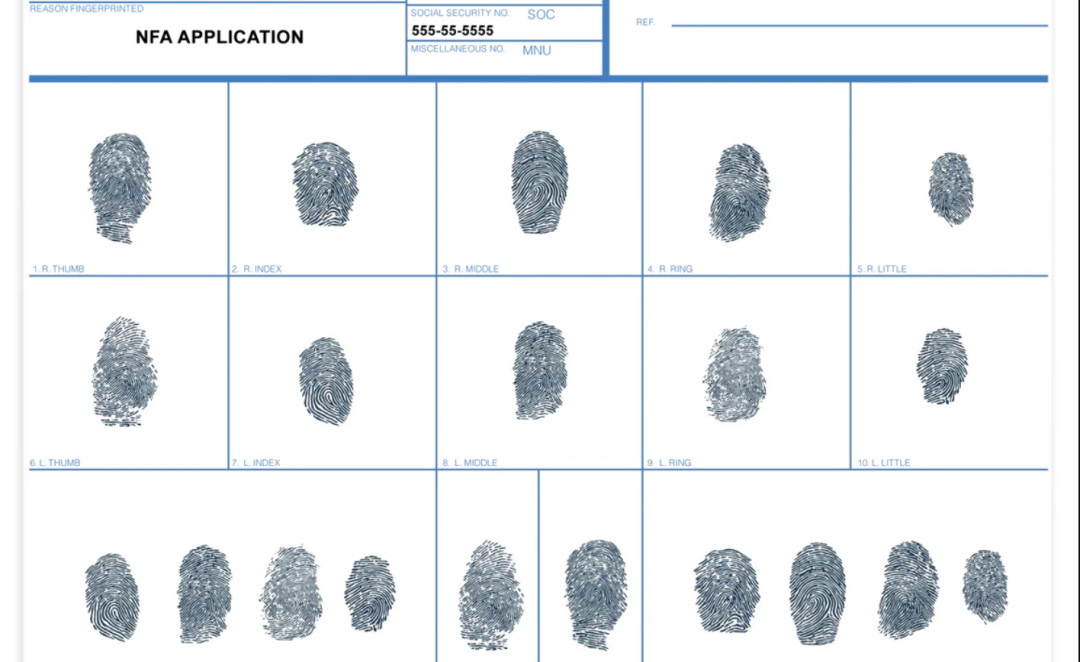
The ATF is proposing to scrap fingerprint card submissions and revise photo identification requirements for NFA Forms 1 and 4—the registration documents needed for suppressors, short-barrel rifles, machine guns, and other regulated items. In its own analysis, the agency conceded that fingerprints have yielded actionable intelligence in fewer than 1% of all NFA applications processed to date. The proposal marks a rare admission that current requirements waste resources without meaningful security benefit.
Key Details
- Fingerprint cards will no longer be required for Form 1 (making) or Form 4 (transfer) submissions.
- Photo identification requirements are under revision; passport-style photos will no longer be mandatory.
- The ATF's internal data shows fingerprints were useful in less than 1% of NFA applications historically.
- The change affects all federally regulated NFA items: suppressors, short-barreled rifles, short-barreled shotguns, machine guns, destructive devices, and any other weapons.
Why It Matters for Gun Owners
NFA applicants—mostly suppressors and SBR filers—currently face months-long wait times on Forms 1 and 4. Removing fingerprint and photo requirements cuts administrative overhead, which could speed processing. For shooters running suppressors or short-barrel setups, this means fewer hoops to jump through without compromising the agency's stated security goals. The change is neutral or positive for anyone currently sitting on a pending Form 4 or considering an NFA purchase. No states are blocked from NFA transfers, but processing delays vary by ATF field office. Gun owners should expect revised Form 1 and 4 instructions within months if this proposal is finalized.
DownRange Analysis
The ATF's own confession that fingerprints fail to deliver results in 99% of cases undermines the entire statutory basis for the requirement. If Congress intended fingerprinting to serve as a security gate, the data proves it doesn't. This proposal likely survives scrutiny—it's an agency efficiency play, not a rights expansion or restriction. The real win is procedural: faster NFA approvals reduce the effective delay tax on constitutional exercise. Watch for the Federal Register notice and public comment period. No state-level pushback is expected, as this is an ATF administrative simplification, not new policy. Gun owners should file comments supporting the change if they want to accelerate the timeline.