12-Gauge Shotguns Remain Top Choice for Home Defense in 2026
Home defense shotgun selection comes down to reliability, ergonomics, and shot placement—not social media hype or influencer affiliate links. The 12-gauge dominates the market because it delivers stopping power within typical home distances (7-15 yards) where most defensive encounters occur. Barrel length, action type, and ammunition selection matter far more than cosmetic upgrades.
Pump-action and semi-automatic shotguns represent the two primary fighting platforms for armed homeowners. Pump guns require manual cycling between shots but offer absolute reliability and lower cost. Semi-automatics cycle faster and reduce recoil management between rounds, critical when adrenaline spikes during a threat.
Why It Matters for Gun Owners
Shotgun spread patterns at defensive distances get oversold. At 7 yards, a standard cylinder-bore barrel throws a pattern roughly the size of a human torso—you still must aim precisely. Buckshot (00 pellets) penetrates drywall and over-penetrates barriers. Birdshot lacks consistent barrier penetration for reliable stopping. Federal FliteControl, Hornady TAP, and Speer Gold Dot slugs offer controlled spread with acceptable penetration through clothing and barriers.
Shotgun-mounted lights and sights accelerate target acquisition in darkness. 18.5-inch barrels optimize maneuverability in hallways and stairwells without sacrificing velocity. Shorter barrels (under 18 inches) require federal tax stamps and NFA registration. Most home defenders avoid NFA complications and stick with 18.5-inch options.
Weight matters during extended home defense scenarios. An 8-pound shotgun fatigues your support arm during room clearing more than a 6-pound carbine. Magazine-fed systems allow faster reloads than tube-fed competitors, though speed rarely factors in home defense—stopping the threat matters more.
Shotgun proficiency demands practice. Recoil management, target transitions, and magazine/tube reloads require repetition. Many gun owners buy shotguns without shooting them at defensive distances. Pattern testing at 7, 10, and 15 yards reveals actual shot placement capabilities specific to your barrel and ammunition combination.
Action Types and Real-World Considerations
Pump-action shotguns (Remington 870, Mossberg 500) cost $300-$500 and require no external power or complex mechanics. They malfunction only when deliberately short-stroked—shooter error, not design failure. Aftermarket support exceeds any competitor. Used examples remain reliable despite age.
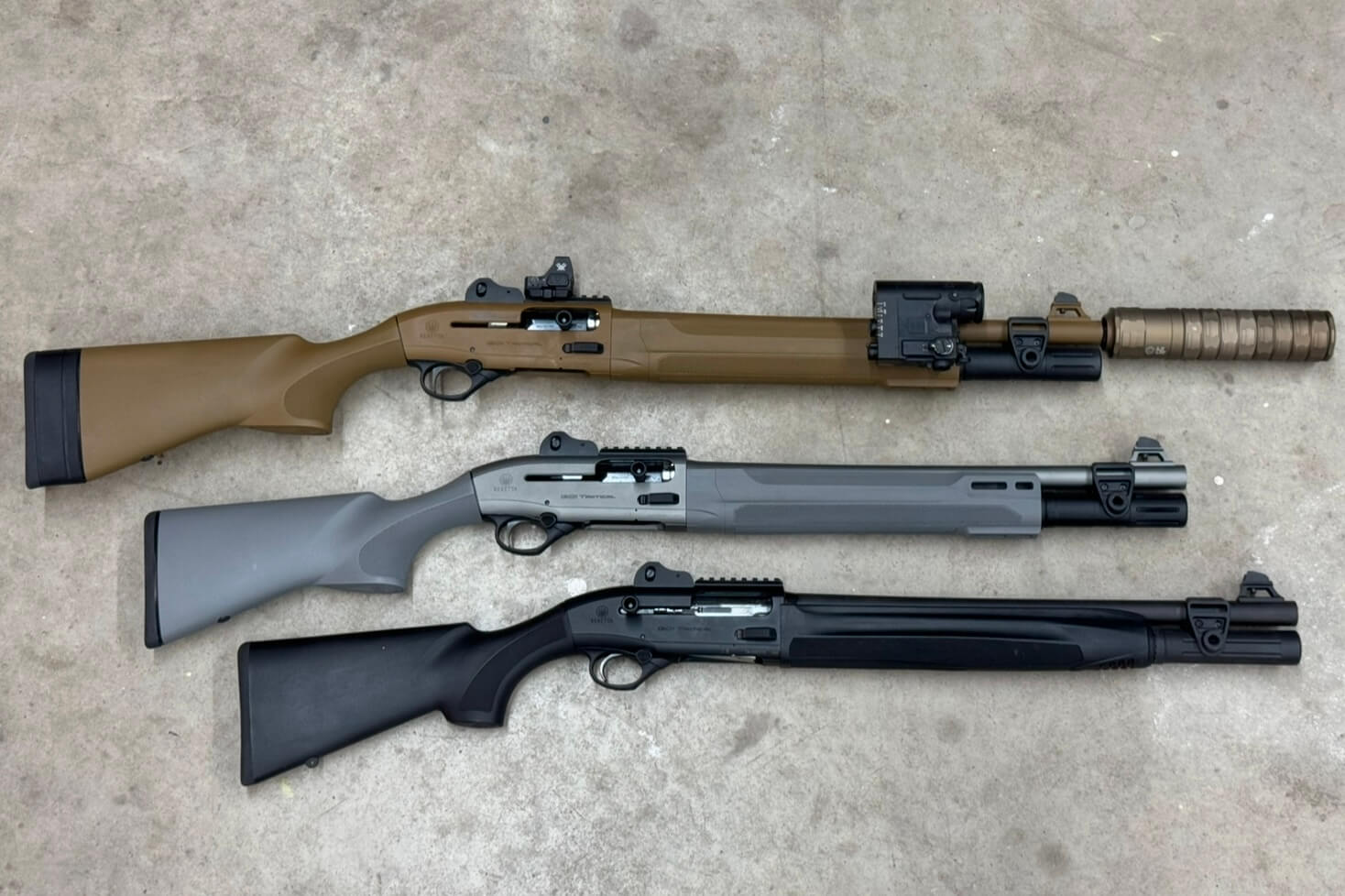
Semi-automatic shotguns (Beretta 1301, Benelli M4) cost $1,200-$2,500 but reduce recoil significantly and allow faster follow-up shots. Gas-operated systems generally run cleaner than inertia-driven competitors in dirty conditions. Inertia shotguns require higher-velocity ammunition (1,200 fps minimum).
Magazine-fed systems (Saiga 12, standard AR-15 pattern) offer rapid reloads and familiar ergonomics to carbine shooters. Reliability varies by manufacturer. Feeding inconsistencies plagued early designs but newer offerings perform adequately with quality ammunition.
DownRange Bottom Line
Home defense shotgun selection should prioritize what you'll actually train with, not what generates clicks online. Budget $400-$600 for a combat-ready pump-action with light and ammunition. Budget $1,500+ for a quality semi-automatic if recoil management matters to your household.
Buy ammunition and shoot defensive distances monthly. Know your pattern spread at 7, 10, and 15 yards. Practice reloads and target transitions. A $400 Mossberg 500 mastered beats a $2,000 Benelli collecting dust in a safe.
Shotguns work for home defense because they deliver terminal performance at close range with minimal over-thinking. Stop shopping. Start shooting.