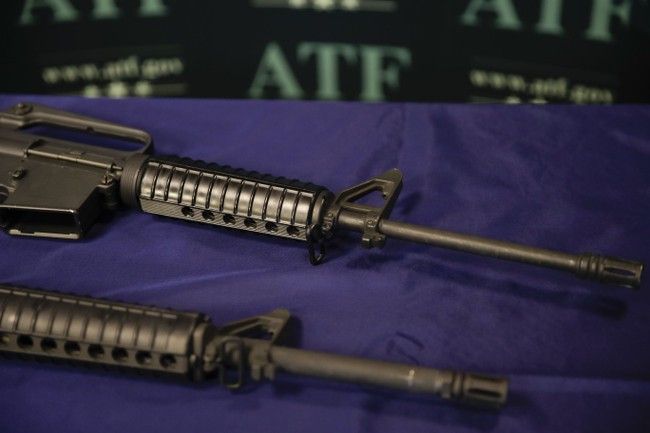
Ghost Gun Ruling Could Reshape How ATF Regulates All Firearms
A recent federal ruling on frame-and-receiver classification threatens to redefine ATF authority over firearm components well beyond the ghost gun debate. The decision hinges on how courts interpret what constitutes a regulated firearm under current law—a distinction that could ripple through manufacturing, retail sales, and private transfers across multiple states.
Key Details
- The ruling challenges the ATF's ability to retroactively classify unfinished receiver kits as complete firearms.
- Anti-gun advocates have demanded action on untraceable weapons for years, but actual ghost gun crime data remains negligible compared to mainstream media coverage.
- The decision's legal framework could establish precedent for how courts evaluate other component classifications and manufacturing definitions going forward.
Why It Matters for Gun Owners
If courts reject the ATF's expansive interpretation of what qualifies as a firearm, the agency loses regulatory ground on an entire category of parts and kits currently treated as firearms under serial-number and background-check requirements. This affects anyone who buys, builds, or sells AR-15 lower receivers, pistol frames, or unfinished 80% components. Manufacturers face uncertainty about inventory compliance. Dealers must recalibrate what requires FFL transactions. Gun owners in states that already restrict these components could see those laws challenged. The ruling also signals that Bruen-era courts are skeptical of ATF overreach—specifically regulatory definitions that stretch beyond statute.
DownRange Analysis
The ghost gun hysteria has never matched the actual threat. Crime statistics consistently show these weapons represent a microscopic fraction of gun violence, yet the narrative drives policy. This ruling matters because it forces the ATF to defend its regulatory authority using explicit statutory language rather than agency discretion. If the court agrees that frames and receivers are not inherently firearms under the law as written, the ATF can't simply declare them so. That's a Bruen win—textualism applied to regulatory overreach. For gun owners, this creates temporary uncertainty but long-term protection against federal agencies unilaterally redefining what you can own. Watch for appeals and legislative reaction. The anti-gun movement will push Congress to close any gap this ruling opens.