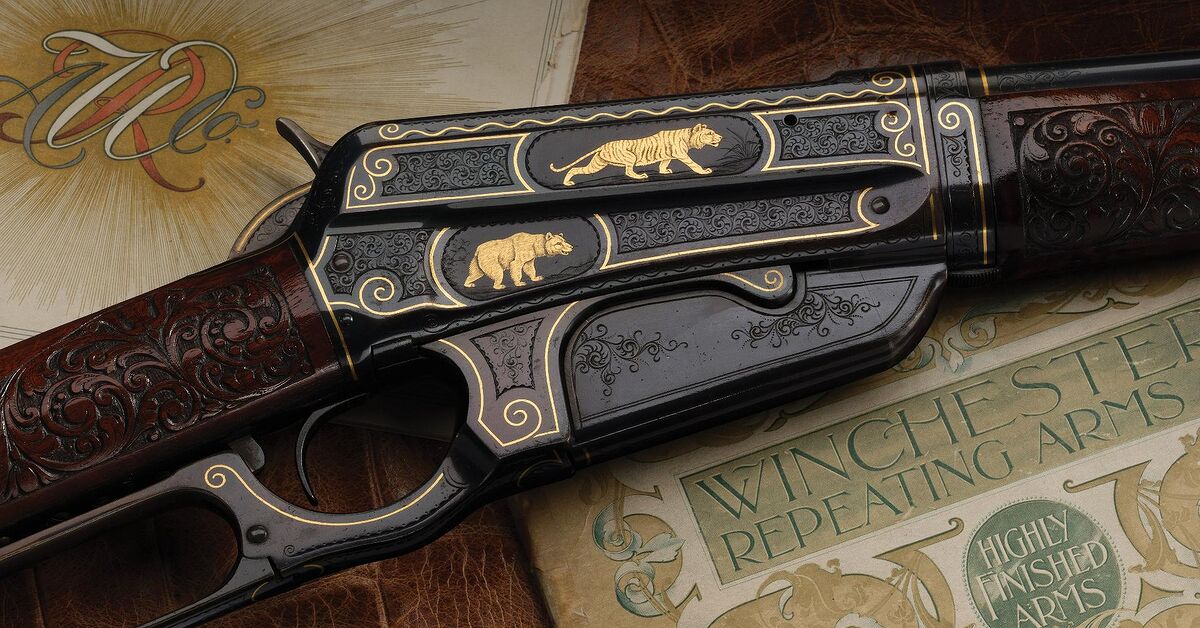
Browning's Box Magazine Design Kept Lever-Actions Competitive Against Bolt-Actions
By the 1890s, John Moses Browning faced a brutal market reality: tube-magazine lever-actions couldn't handle spitzer bullets safely. European bolt-actions dominated with pointed rounds that risked detonation inside traditional lever-gun tubes during recoil. Browning's Winchester Model 1895 solved this with a box magazine—a fundamental redesign that extended the lever-action's commercial life decades past its predicted obsolescence.
Previous Browning lever designs had dominated for 20 years. But tube magazines forced shooters to choose between safe ammunition or fast reloading. Pointed bullets in a tube created dangerous pressure situations. The 1895 eliminated that choice entirely. Its box magazine accepted spitzer rounds without risk, matching the ballistic standards European rifles established as the new baseline.
This wasn't minor tinkering. Browning rebuilt the entire operating mechanism to feed from a detachable box instead of a tube. He kept the lever-action's speed and ergonomics while accepting modern ammunition. The 1895 arrived exactly when bolt-actions were establishing themselves as the rifle's future, yet this single design innovation bought lever-actions another generation of market relevance.
Why It Matters for Gun Owners
The 1895 teaches modern shooters something essential: good engineering solves real problems, not marketing narratives. Browning identified a genuine technical failure and rebuilt the weapon around ammunition evolution rather than chasing trends.
Today's shooters encounter endless claims about "revolutionary" designs. Most solve nothing. The 1895 solved everything it needed to address—it made tube magazines compatible with modern ammunition while preserving what made lever-actions fast and intuitive to operate.
For collectors, the 1895 occupies strange middle ground. It's mechanically capable, historically significant, and reliable. Yet it arrived too late for major military adoption and too early to become truly obsolete. Winchester chambered it in .30-40 Krag, .405 Winchester, and .30-06 Springfield. Hunters actually used these guns. They worked. That's rarer than you'd think for transitional designs that often served no one well.
The rifle proves that good solutions to real problems survive market pressures better than guns built around fashion. Modern AR owners might dismiss lever-actions, but the 1895 demonstrates why some shooters still value them: they work without batteries, electronics, or complex maintenance. They're simple mechanical systems that do their job reliably.
Background: The Lever-Action Crisis
Before 1895, Winchester lever-actions dominated American markets. The Model 1873 and 1892 sold hundreds of thousands. But ballistic technology moved faster than tube-magazine design could accommodate. Spitzer bullets were flatter-shooting and harder-hitting than round-nose rounds. They also created safety issues in tubes.
Browning held over 80 patents by this point. He understood rifle mechanics better than anyone in America. Rather than fight ammunition evolution, he capitalized on it. The 1895's box magazine was his answer—proven, reliable, and elegant in its simplicity.
Military trials never made the 1895 standard issue in major armies. Bolt-actions won that war decisively. But civilian shooters and hunters adopted it widely. Winchester produced roughly 426,000 units through 1931. That's substantial production for a rifle that wasn't standard military issue.
DownRange Bottom Line
The Winchester 1895 represents something modern shooters should remember: engineering solves problems better than marketing does. Browning didn't create artificial demand or chase trends. He fixed a genuine technical flaw and extended an entire platform's life as a result. That's how you build rifles that last.