Trijicon ACOG Transformed Marine Marksmanship Beyond Iron Sights
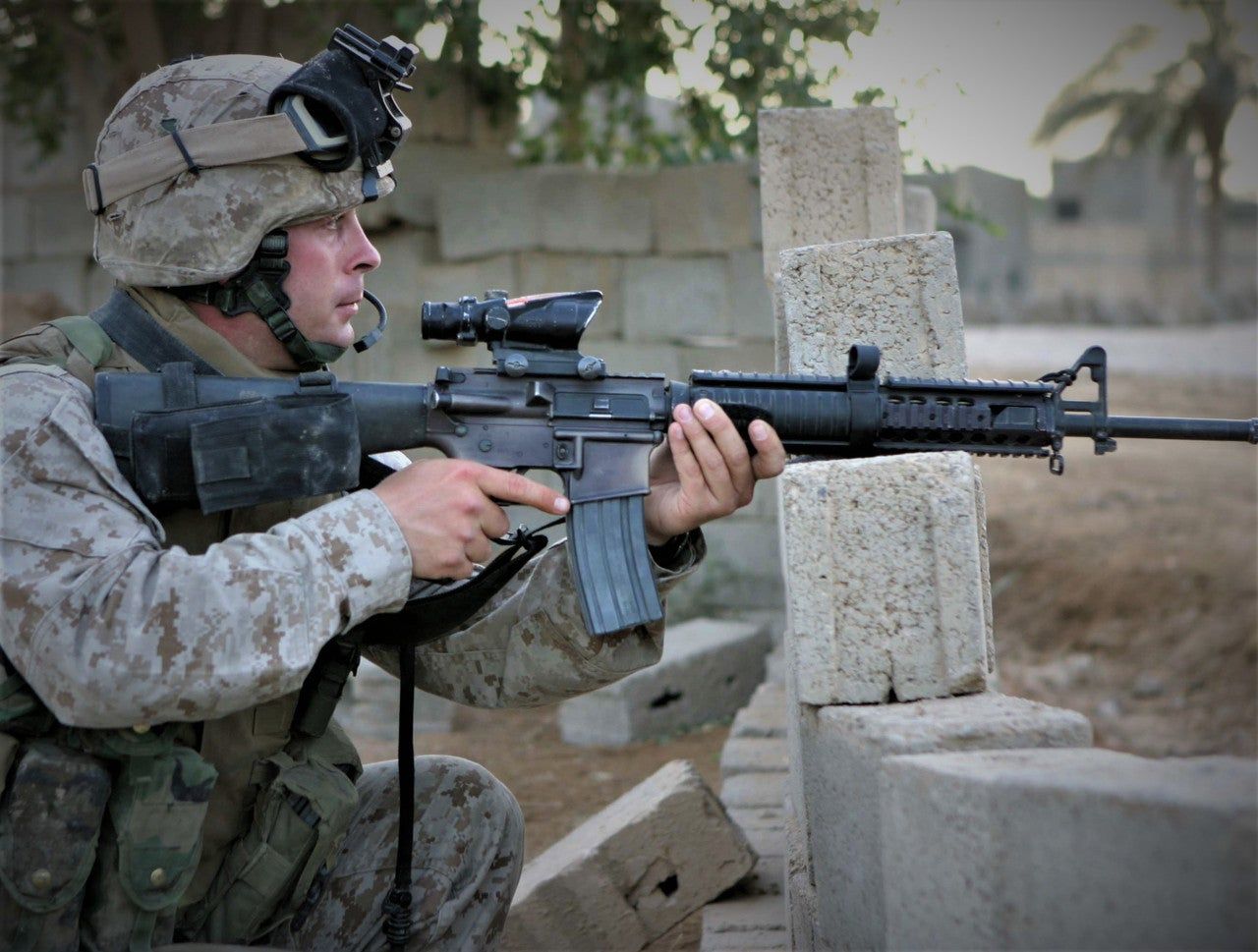
The United States Marine Corps already owned exceptional riflemen. Trained marksmen consistently scored kills at 500 yards using iron sights alone. Then the Corps adopted the Trijicon ACOG, a 4x magnified optic that extended effective range and precision beyond previous standards.
The ACOG's impact shifted how Marines engaged targets. Magnification brought distant threats into sharp focus. The fiber-optic and tritium reticle system worked in daylight and darkness. Marines who could hit targets at 500 yards suddenly achieved lethal accuracy at distances that previously required luck or exceptional skill.
This wasn't theoretical capability. Combat deployments proved the ACOG's real-world advantage. Marines carrying the optic consistently outperformed competitors using identical rifles with traditional sights. The difference came down to one factor: the ability to see the target clearly before pressing the trigger.
Why It Matters for Gun Owners
The ACOG story matters because it illustrates a fundamental truth about firearms: optics determine outcomes. A trained shooter with an inferior sight system will lose to an equally trained shooter with superior glass.
Daily carriers and sport shooters often overlook this lesson. Iron sights demand respect—they work, they're reliable, they require no batteries. But magnified optics extend your effective range and increase hit probability at distances where iron sights force you to guess. The Marine Corps didn't adopt the ACOG because iron sights stopped working. They adopted it because better tools produce better results.
For defensive pistol carriers, the parallel applies to micro red dots. For rifle owners, it means understanding what magnification level matches your likely engagement distance. For precision shooters, optic selection directly determines whether you hit at 300 yards or miss entirely.
The ACOG also changed how shooters train. Marines learned to trust their optics. They learned sight picture with magnification. They learned to manage turrets and understand dope. That training advantage sticks with every operator who carries an ACOG into the field.
Background
Trijicon built the ACOG in the 1980s. The design married fiber-optic collection with tritium self-illumination. No batteries required—the optic harvested daylight through its objective lens and glowed in darkness from tritium vials behind the reticle.
The Marine Corps tested and evaluated the ACOG against existing sight systems. Performance data made the choice clear. In 2002, the Corps began widespread adoption across infantry units. By 2010, ACOG equipped the majority of Marine Corps rifles.
Variants emerged for different missions. The 4x32 became standard for 5.56 rifles. The TA33 offered 3x magnification in a compact package. The TA11 combined 3.5x magnification with a dovetail mount. Each variant solved specific tactical problems.
Other military branches followed Marine Corps lead. The Army equipped units with ACOGs. Special operations forces made the optic their standard. Allied militaries adopted identical or similar systems. The ACOG became the measure against which all combat optics were judged.
DownRange Bottom Line
The Trijicon ACOG proved that equipment matters. Training matters more, but training without proper tools leaves capability on the table. Marines were already deadly. The ACOG made them deadlier by extending their effective range and increasing hit probability when it counted.
That lesson applies to every gun owner. Invest in optics matched to your mission. Train with your equipment until you own it completely. Don't accept limitations imposed by inferior glass. The difference between hitting and missing might be your sight system.