DOJ Declares Age-Based Handgun Bans Unconstitutional
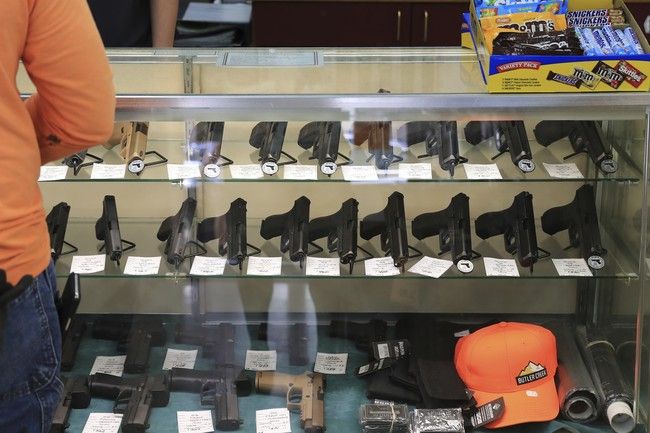
The Department of Justice filed a formal legal opinion concluding that federal restrictions on handgun purchases for adults under 21 years old violate Second Amendment protections. The opinion directly challenges the constitutionality of 18 U.S.C. § 922(b)(1), which prohibits federally licensed dealers from selling handguns to anyone under 21. This marks the first time the executive branch has formally argued that age-based purchase restrictions fail constitutional review under the New York State Rifle & Pistol Association v. Bruen standard.
Key Details
- Federal courts have split on whether 18-to-20-year-olds retain full Second Amendment rights, with some citing 1791-era age-of-majority law as justification for restrictions
- The DOJ opinion rejects historical arguments that modern age-based limits mirror founding-era practice, noting that federal law now defines adulthood at 18 for most constitutional purposes
- The ruling applies to retail handgun sales under federal law, though state laws imposing higher age requirements remain separate legal questions
- Multiple circuit courts have upheld the age restriction; the Eleventh Circuit specifically found historical basis for the ban in 2024
Why It Matters for Gun Owners
This opinion creates immediate pressure on current federal law. If courts adopt the DOJ's reasoning in pending cases, the handgun purchase restriction for 18-to-20-year-olds could fall nationwide. Young adults in this age bracket—many of whom are already able to own rifles and shotguns—would gain access to lawfully purchased handguns for self-defense and sport shooting. However, individual states retain authority to set their own age limits, meaning some jurisdictions will likely maintain higher restrictions. Gun owners in contested circuits should monitor ongoing litigation closely. For the firearms industry, a successful challenge could expand the retail handgun market to a segment currently blocked by federal law.
DownRange Analysis
The DOJ position reflects serious weakness in the historical-basis argument for age restrictions under Bruen. Federal law already treats 18-year-olds as adults for voting, contract, and military service—carving out a narrow age band solely for handgun purchases looks like modern policy masquerading as historical tradition. The circuit split guarantees Supreme Court review eventually. Whether the Court accepts the government's own constitutional reading or sticks with lower court precedent will determine whether this falls quickly or drags through years of litigation. Gun owners should expect this issue to reach SCOTUS within the next 2-3 years. State bans will survive longer.