DOJ Lets NFA Legal Challenge Die Without Appeal
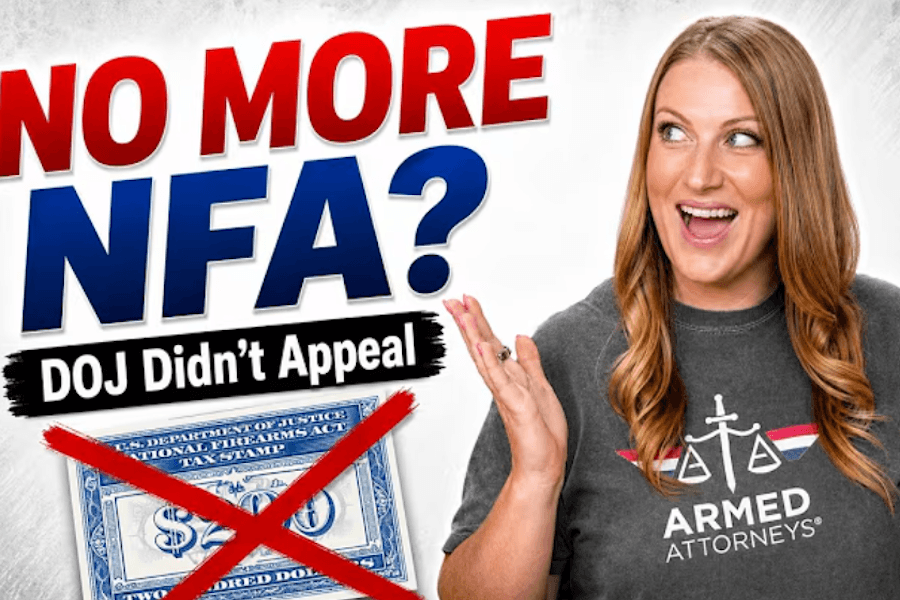
The Department of Justice allowed a critical appeal deadline to pass Thursday, effectively abandoning a legal challenge to the National Firearms Act. No appeal was filed. The decision marks a significant shift in how federal gun law gets enforced going forward.
This wasn't accidental. DOJ officials made a calculated choice to let the case expire rather than continue fighting. That matters because courts rarely get chances to revisit foundational gun law interpretations. Once a deadline passes, it's gone.
Why It Matters for Gun Owners
For daily carriers and shooters, this decision affects how the NFA operates at ground level. The National Firearms Act regulates suppressors, short-barrel rifles, machine guns, and other regulated items through a tax stamp system established in 1934. Legal challenges to that authority don't come along often.
Gun owners have pushed hard for NFA reform or elimination for decades. Every time a court case threatens the law's validity, Second Amendment advocates pay close attention. This case represented one avenue for challenging the NFA's constitutional foundation.
By declining to appeal, DOJ essentially acknowledged it couldn't win the argument. When the government doesn't fight a legal case, observers interpret that as weakness in their position. That sends a message to other judges and future litigants considering similar challenges.
The practical impact: NFA regulations remain unchanged. Suppressors still require Form 1 or Form 4 paperwork and $200 tax stamps. Short-barrel rifles still need registration. The process stays the same for anyone buying a can or building a short-barreled AR-15.
However, the precedent matters. If DOJ won't defend the NFA in court, gun rights organizations may file new challenges with fresh legal theories. The government's retreat signals vulnerability.
Background
The National Firearms Act has survived legal attack since 1934. It was originally designed to regulate machine guns after Prohibition gangland violence. Over time, Congress expanded it to cover suppressors, short-barrel rifles, short-barrel shotguns, and destructive devices.
Gun rights advocates argue the NFA violates the Second Amendment. They contend that common defensive tools—especially suppressors—shouldn't require federal registration or tax stamps. Several recent court decisions have moved in that direction, questioning federal power over certain firearms regulations.
The specific case involved whether NFA regulations exceeded federal authority. Lower courts had examined the issue. When an appeal deadline arrives, the DOJ has to decide: fight or fold. This time, they folded.
Legal observers attribute this to shifting judicial attitudes toward gun rights. After Supreme Court decisions like Bruen, federal courts have become less deferential to gun restrictions. DOJ attorneys likely calculated that appealing would result in a loss that sets bad precedent nationally.
Sometimes losing a case in front of the wrong judge creates lasting damage to a government position. By not appealing, DOJ avoided that risk—but also abandoned defending the law.
DownRange Bottom Line
The NFA stays law. Gun owners still need tax stamps for suppressors and short-barrel rifles. Nothing changes operationally for anyone buying regulated items or filling out forms.
But strategically, DOJ's failure to appeal signals weakness. That matters. Gun rights groups will likely file new NFA challenges in friendlier venues with updated constitutional arguments. The government's retreat removes one obstacle.
For shooters, this means the fight over NFA legitimacy isn't over. It's just moved to a different court. Stay informed on new cases. These developments affect how you legally build and equip firearms.