U.S. Soldier Qualifies on Poland's wz. 96 Beryl at Bemowo Piskie
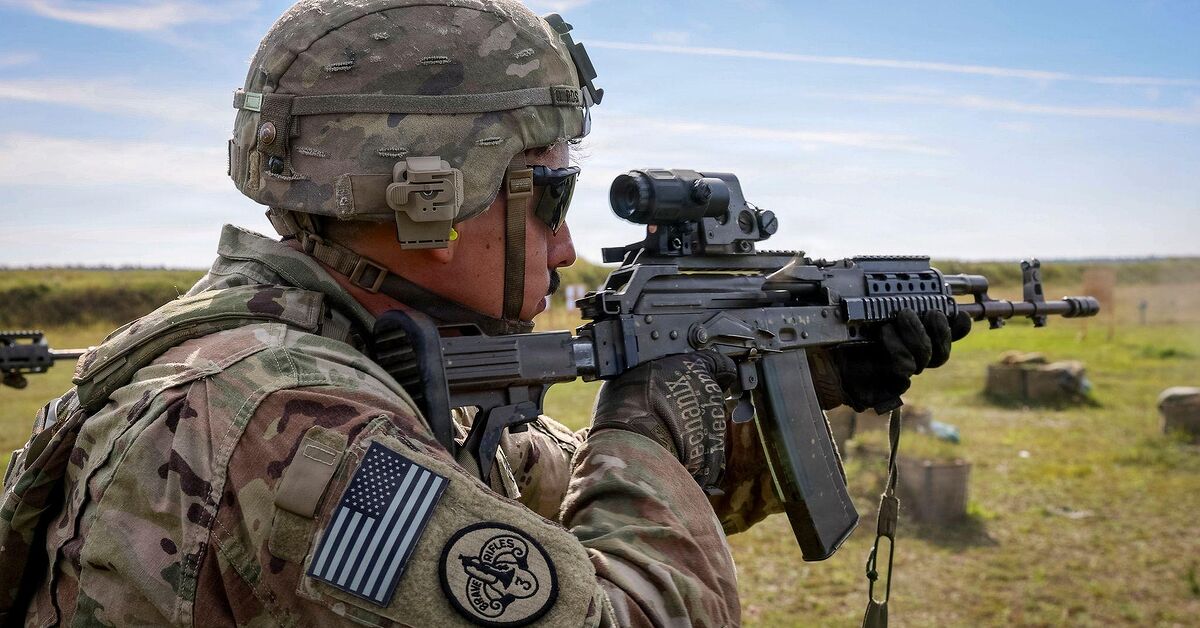
A U.S. Army staff sergeant from 2nd Battalion, 3rd Field Artillery Regiment fired Poland's standard-issue wz. 96 Beryl rifle during weapons familiarization drills at Bemowo Piskie Training Area. The soldier, assigned to NATO's Forward Land Forces Battle Group-Poland, cycled through live fire to master the 5.56mm platform unfamiliar to American crews.
Weapons familiarization drills exist for exactly this purpose: hand soldiers unfamiliar rifles and let combat training override confusion. Muscle memory bridges the gap between doctrine and actual trigger time. This exercise tested that theory with a contemporary European assault rifle.
Why It Matters for Gun Owners
American shooters and military professionals need exposure to foreign small arms. Poland's military—a NATO ally—relies on the wz. 96 Beryl for frontline operations. Understanding how allied forces arm themselves matters when supply chains shift or joint operations demand cross-platform competency.
The Beryl represents practical 5.56mm rifle design. It fires standard NATO ammunition. Magazine compatibility, charging handle position, and safety lever placement differ from M16/M4 platforms. Soldiers must retrain their hands to operate unfamiliar controls under stress. That training gap directly impacts mission effectiveness.
For civilian shooters, this highlights why weapons familiarity transcends one rifle platform. Self-defense proficiency doesn't stop at your primary carry gun. Advanced shooters train across platforms—AK variants, HK systems, AR-patterns—because tactical situations demand adaptability. The Army's approach mirrors professional armed citizen training.
Background: The wz. 96 Beryl
Poland adopted the wz. 96 Beryl in 1996, replacing Soviet-era weapons across the military. The rifle's name derives from the mineral beryl. Designers based the platform on the Kalashnikov operating system but engineered NATO 5.56mm compatibility. Modern variants include picatinny rails for optics and tactical accessories.
The Beryl fires 5.56×45mm NATO ammunition. Magazine capacity runs standard 30-round configuration. Effective range exceeds 400 meters for trained marksmen. Fire control selector offers safe, semi-auto, and full-auto modes. Polish military doctrine emphasizes accurate, disciplined fire over volume.
NATO's Forward Land Forces Battle Group-Poland positions U.S. forces alongside Polish, British, and German units. This multinational formation deters Russian aggression along the Eastern European frontier. Soldiers routinely train on each nation's primary rifle platform to build interoperability. Cross-training exercises occur quarterly at Bemowo Piskie and other training areas across Poland.
The 2nd Battalion, 3rd Field Artillery Regiment deployed to Poland as part of standing NATO commitments. Artillery units maintain smaller arms proficiency despite their primary mission. Individual rifleman skills matter even for fire support personnel.
DownRange Bottom Line
American military readiness demands soldiers master any rifle they encounter. Poland's wz. 96 Beryl represents a proven NATO platform that works. Soldiers who train on multiple rifle systems develop faster adaptability under combat conditions.
Civilian gun owners benefit from the same principle. Consistent fundamentals—proper grip, sight picture, trigger control—transfer across platforms. The staff sergeant's training exercise reinforces why serious shooters avoid becoming dependent on one rifle design. NATO interoperability exercises prove that competent gunhandling skills matter more than platform familiarity.
This drill also demonstrates Poland's integration into Western defense architecture. The Polish military operates modern NATO equipment and trains alongside American forces regularly. That partnership strengthens Eastern European security and stabilizes the region facing Russian threats.