SAF, FPC Push Supreme Court to Gut New York's 'Sensitive Places' Law
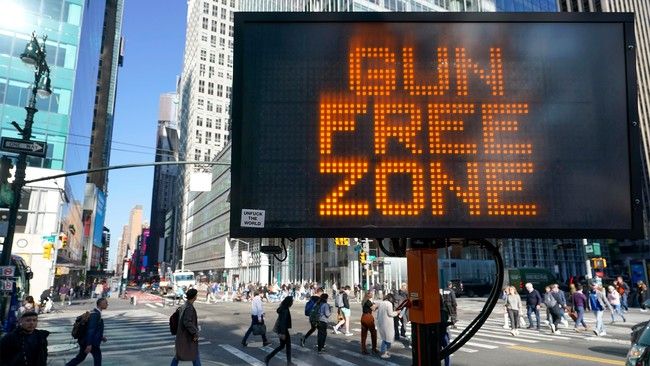
The Second Amendment Foundation and Firearms Policy Coalition filed separate cert petitions asking the Supreme Court to review New York's 2022 Concealed Carry Improvement Act, specifically the law's expansive "sensitive places" restrictions. Gov. Kathy Hochul signed the statute into law within months of the Supreme Court's 2022 decision striking down New York's century-old may-issue permitting scheme. The law has faced continuous legal challenges since implementation, with the gun-free zone provisions drawing particular scrutiny from Second Amendment advocates.
Key Details
- The CCIA added dozens of locations classified as prohibited carry zones, including public transit, parks, schools, hospitals, and privately-owned businesses unless explicitly posted otherwise.
- Multiple federal courts have already ruled against portions of the law in earlier litigation, creating circuit splits on which provisions survive Bruen-level constitutional review.
- SAF and FPC argue the restrictions lack historical precedent and fail the text-history-tradition test established by the Supreme Court's June 2022 Bruen decision.
- The cert petitions target the law's core mechanics—not merely technical licensing requirements, but the substantive prohibition on lawful carry in wide swaths of public space.
Why It Matters for Gun Owners
New York's sensitive places regime effectively narrows where New Yorkers can legally carry even with a valid permit. If SCOTUS denies cert, the lower court rulings remain fragmented, leaving permit holders confused about where they can and cannot carry. Conversely, cert grant and a favorable ruling would crater similar restrictions in other states—Connecticut, California, Illinois, and Maryland have all adopted comparable gun-free zone schemes post-Bruen. Carry permit holders in these jurisdictions would immediately face clarity on whether their permits mean anything outside their home. The outcome also signals whether Bruen actually constrains state legislatures or merely shifted the battlefield to creative restrictions that skirt the permit question entirely.
DownRange Analysis
New York's approach reveals anti-gun legislatures' playbook: lose on permits, win on geography. By technically issuing permits while rendering them useless across most public space, Hochul attempted an end-run around Bruen's logic. The Supreme Court's silence on whether cert will be granted tells us they're not rushing—likely meaning a decision on whether to hear the case won't arrive until late 2026 or 2027. That delay matters. Every month of uncertainty allows lower courts to splinter further on what Bruen actually permits. Gun owners in restricted states need to assume the law stands as written for now, but a cert grant would represent SCOTUS finally following its own precedent to its logical conclusion.