Reflex Suppressors Bring Scout Rifles Full Circle
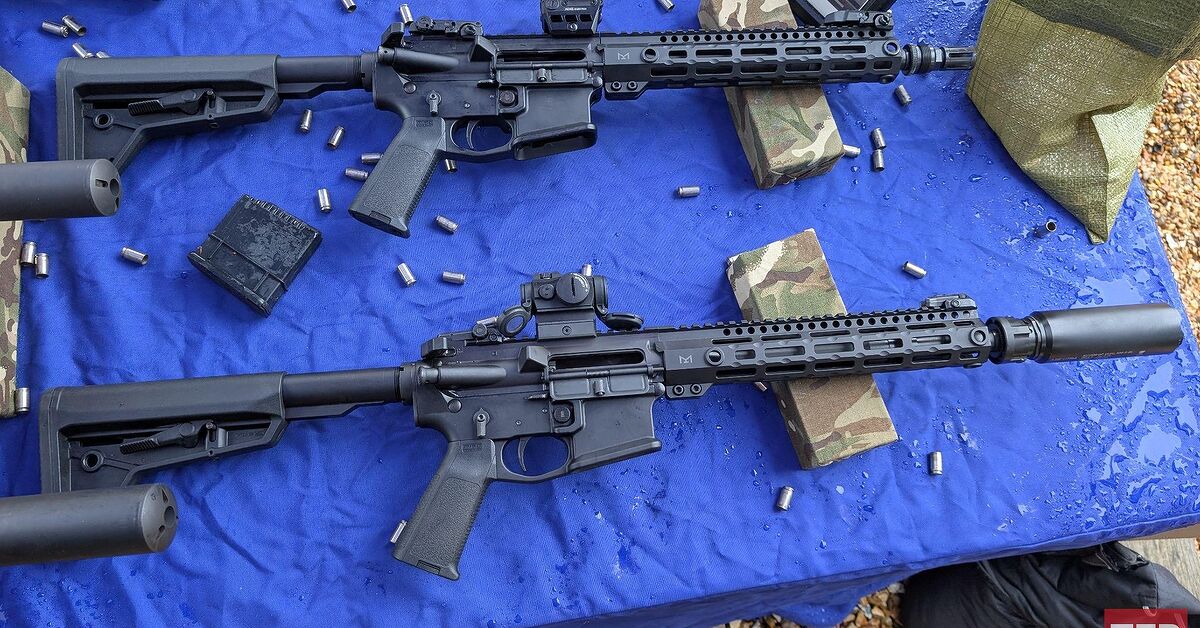
Reflex suppressor technology has solved a decades-old problem for Scout rifle shooters: how to run a suppressor without destroying the platform's defining characteristic—compact, balanced ergonomics. By integrating the suppressor tube inside the bolt carrier or action rather than extending downrange, reflex designs deliver noise reduction while maintaining the short profile and neutral handling that made Scout rifles popular among hunters and precision riflemen.
Key Details
Reflex suppressors eliminate the balance problem. Traditional suppressors mounted to the muzzle extend the rifle forward, shifting weight and changing point-of-aim. Reflex designs integrate suppression internally, keeping weight centered near the action. Scout rifles—already built around short barrels and forward optics mounts—regain their original ergonomic advantage when paired with reflex suppressors rather than conventional cans.
Noise reduction matches full-size suppressors. Reflex technology achieves comparable decibel reduction to conventional suppressors. Scout rifle shooters no longer face the choice between hearing protection and handling. The compact platform remains compact.
Mounting integration improves reliability. Reflex suppressor mounts attach directly to the action, eliminating the loose connection points common with muzzle devices. This tighter interface reduces suppressor-induced shift and simplifies takedown for cleaning.
Why It Matters for Gun Owners
Scout rifle builders have historically compromised on suppressors. Adding a conventional can made a 16-inch Scout rifle handle like a 24-inch hunting rifle. Weight shifted forward. Target acquisition slowed. Reflex technology reverses that trade-off entirely. Hunters running Scout setups can now suppress without re-learning their rifle's balance. Precision shooters get hearing protection and unchanged sight picture. Anyone running a Scout rifle platform—whether for hunting, competition, or home defense—can finally add a suppressor without redesigning their shooting technique. The technology works across most Scout rifle actions, from .308 Winchester to 6.5 Creedmoor, making it accessible across the entire class.
DownRange Analysis
Reflex suppressors represent matured suppressor engineering meeting a real shooter problem. Scout rifles occupied a specific niche: compact, fast-handling, purpose-built for precision at intermediate distances. That niche required shooters to choose between hearing protection and performance. Reflex technology collapses that false choice. From a market perspective, this expansion gives suppressor manufacturers a new segment to capture—Scout rifle owners who previously avoided cans altogether. From a shooting perspective, Scout rifles finally become complete suppressed systems without penalty. The technology doesn't require new legislation, survives current ATF framework, and improves genuine shooter capability. For gun owners who run Scout rifles seriously, this is the suppressor innovation that actually matters.