Short-Barreled Rifles: NFA Rules Every Carrier Needs to Know Now
Short-barreled rifles sit in federal limbo. Under the National Firearms Act, any rifle with a barrel shorter than 16 inches becomes an NFA weapon requiring registration with ATF, a $200 tax stamp, and compliance with interstate transport rules. New gun owners often don't know where this line sits. Worse, they don't understand the penalties for crossing it.
Key Details
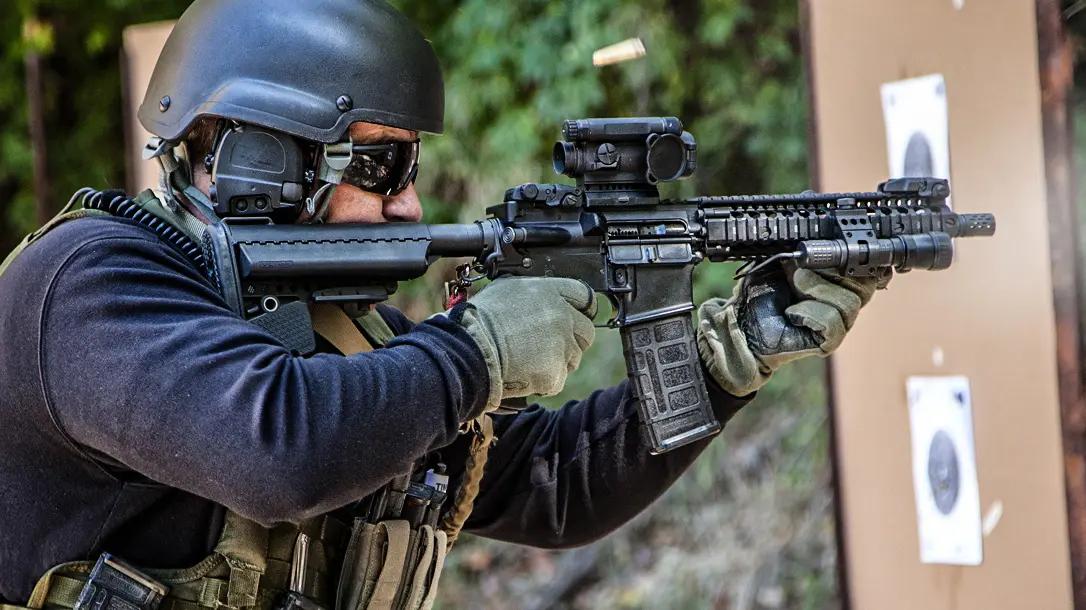
Federal law defines an SBR by barrel length: 16 inches or less triggers NFA classification. Registering an SBR requires submitting ATF Form 1, paying $200, receiving approval, and keeping your registration papers. No registration, no interstate travel, no exemptions. Shooters use SBRs for home defense, vehicle carry, and compact tactical work where full-length rifles create handling problems. Brace-equipped pistols occupy legal gray territory following recent ATF enforcement shifts. Compliance requires understanding your state's laws too—some states ban NFA items or require additional state registration.
Why It Matters for Gun Owners
If you carry daily or keep a rifle for home defense, an SBR offers real advantages: shorter sight radius, faster target transition, easier handling in confined spaces. But federal registration creates a paper trail ATF maintains indefinitely. You cannot legally move an SBR across state lines without ATF permission. Violating SBR rules carries felony penalties—up to 10 years prison and $250,000 in fines. New shooters must verify their configuration measures 16 inches or longer before purchase. Test-fit any brace-equipped pistol on an upper receiver to confirm compliance. Consult ATF guidance or a firearms attorney if you're uncertain whether your build qualifies.
DownRange Analysis
SBRs make tactical sense. A 14.5-inch barrel beats a 20-inch rifle for anyone serious about self-defense or carry logistics. The $200 stamp stings, but registration protects you legally. Here's the hard part: ATF enforcement on braces and configurations keeps shifting. Before you build or buy, measure everything. Document your configuration. If you already own questionable hardware, consult a lawyer before ATF decides to enforce differently. Registration isn't punishment—it's insurance. Ignore it, and you're betting against federal investigators with unlimited resources.