Taurus Judge's 2-Inch Barrel Costs 125 fps on PDX1 Shells
Paul Helinski chronographed a 2-inch Taurus Judge Public Defender Poly in 2011 and recorded Winchester PDX1 averaging about 625 fps. The box says 750. He fired at least six boxes through the gun over several weeks. The Smith & Wesson Governor, the Judge's six-shot rival, has no comparable chronograph data in the same coverage. GunsAmerica Digest admits its Governor material is a January 2011 SHOT Show handling report, not a range test. Both revolvers fire .410 shotshells and .45 Colt. Both make sense only inside close range. The Judge has the measured numbers. The Governor has the better reload system. Know which gap you are buying into before you pick one.
Key Details
The numbers that matter come from the Judge and the Governor's published features.
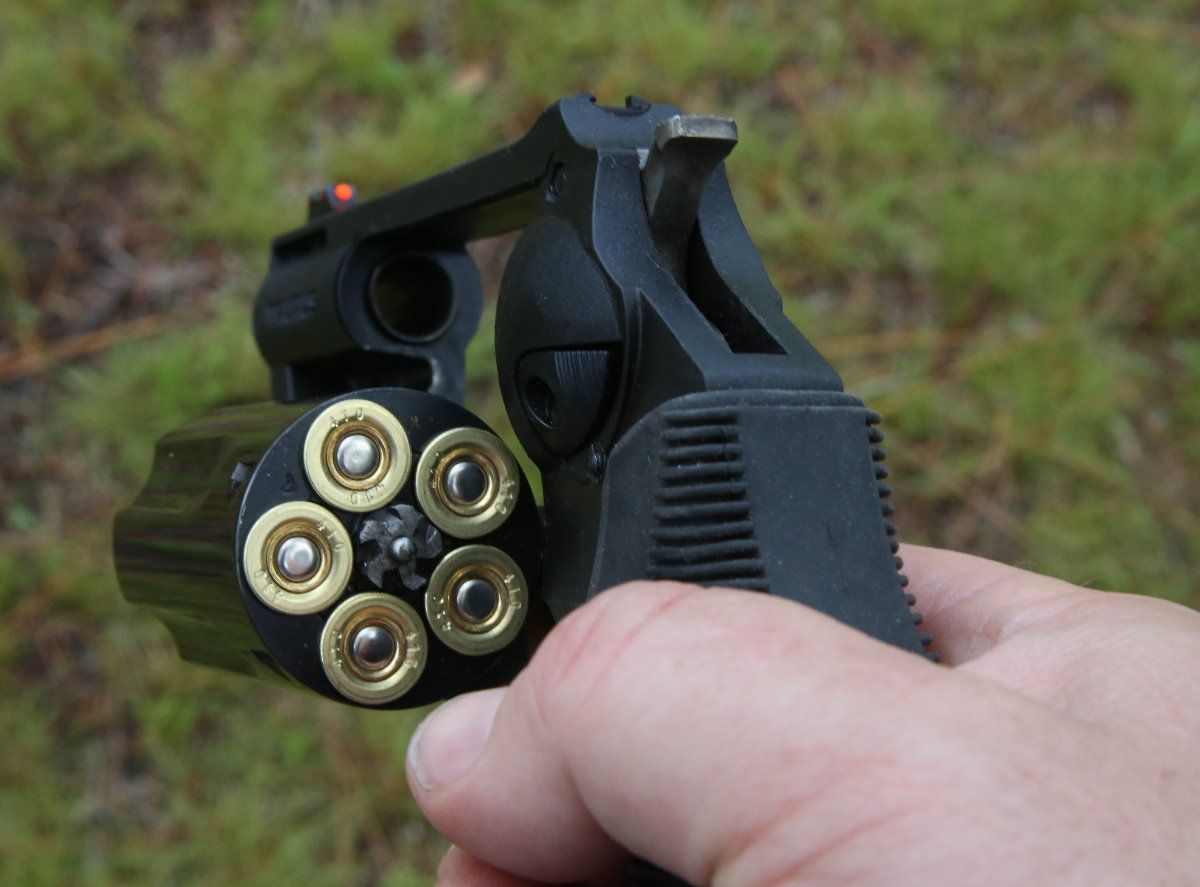
- Taurus Judge Public Defender Poly: five rounds, 2.5-inch cylinder, 23 ounces, polymer frame over a steel subframe, fiber optic front sight, no-snag adjustable rear sight.
- Smith & Wesson Governor: six rounds, 2.5-inch gun, Scandium alloy frame, stainless cylinder, tritium front sight, optional Crimson Trace laser grips.
- Governor moon clips: accepts .45 ACP in full moon clips that also fit the Model 25 and 625. The show gun shipped with three two-round clips and one six-round clip.
- PDX1 velocity: 750 fps on the box, about 625 fps from the 2-inch Judge.
- Hornady 225-grain FTX .45 Colt: 735 fps from the Judge, roughly 200 fps short of rifle figures for the same round.
- 7-yard accuracy: PDX1 usually grouped three disks tightly, but the 12 BBs mostly missed the target. Three-pellet 000 buckshot spread wider and barely hit the target.
- Hornady Triple Defense .410 (2013 follow-up): a 115-grain hollow base slug plus two 65-grain balls. It averaged nearly its 750 fps box velocity. It hit point of aim at 10 feet every time. The slug stayed on point of aim at 10 yards, and the balls usually landed within about 6 inches.
- Chamber length: the 2.5-inch Public Defender Poly and the 2.5-inch Governor both reject 3-inch .410 shells. Some Judge models accept them.
Background
Taurus launched the Judge as the Tracker 4410. The company renamed it after reports that Miami judges were carrying it. The design rests on a simple fact: the .410 shotshell and the .45 Colt cartridge share the same rim and nearly identical body dimensions. A revolver with a cylinder long enough to hold .45 Colt can also hold .410 shells. Taurus built its gun around that overlap. The Judge's barrel carries shallow rifling, which keeps the gun classed as a handgun rather than a short-barreled shotgun. Smith & Wesson introduced the Governor at SHOT Show in January 2011. It took the same cartridge pairing and added a moon clip system for .45 ACP. Moon clips for .45 ACP already existed for the company's Model 25 and 625 revolvers. S&W's idea was to give the shooter a faster reload than loose rounds allow. The two guns now compete in the same niche, and each made a different trade. The Judge chose a larger lineup and measured velocity data. The Governor chose a sixth round and a faster reload.
Why It Matters for Gun Owners
If you carry a .410 revolver, the first thing to check is the chamber length stamped on your specific gun. A 3-inch shell that does not fit is not a load you can fire. Buy ammo only after you confirm the cylinder accepts it. Check the Judge's markings, because some models take 3-inch shells and the Public Defender Poly does not. The second issue is velocity. A 2-inch barrel cost PDX1 about 125 fps in Helinski's testing. That loss changes how buckshot and slugs behave at the distances you actually expect to shoot. Test your carry load at 3, 7 and 10 yards, and record where the pattern lands. Do not assume the box number applies to your gun. The Governor owner has a different job. Moon clips are fast, but they only work if you practice seating them and dumping the cylinder under stress. Buy at least two clips and keep them with the gun. Any owner who trusts a revolver's stated capacity should count the rounds in the cylinder every time they load.
DownRange Analysis
These guns do not raise a Bruen problem. They are handguns under federal classification because of the rifled barrel, so the legal question is simple. The practical question is whether a 2-inch .410 revolver earns a spot in your plan. It earns a spot as a close-range backup, not a primary defensive tool. The Governor's six-round capacity and moon clip reload beat the Judge on paper, but the Judge has the only real chronograph and pattern data in this comparison. That gap should drive your decision. A gun you cannot verify is a gun you have to test yourself. If you already own a .410 revolver, shoot it with the exact load you plan to carry, at the distances you care about, and write down the results. If you are still shopping, buy the Judge only if you can confirm the chamber length and test the ammo. Buy the Governor if the moon clip reload matters more than measured data, and plan to run the clip drill until it is automatic.