Duck-Blind Lead Techniques Miss Grouse in the Brush: Here's Why
A steady duck hunter who drops passing mallards with four shots can still go hitless on grouse. That's the problem Don Zutz laid out in an Outdoor Life piece first printed in November 1976 and now carried under a November 14, 2026 date. Zutz, a 43-year-old who has hunted and fished all his life, uses a companion's failure in the uplands to explain why one lead technique cannot cover every wingshot. His core claim: a versatile shooter matches the lead method to the bird, not the other way around.
Key Details
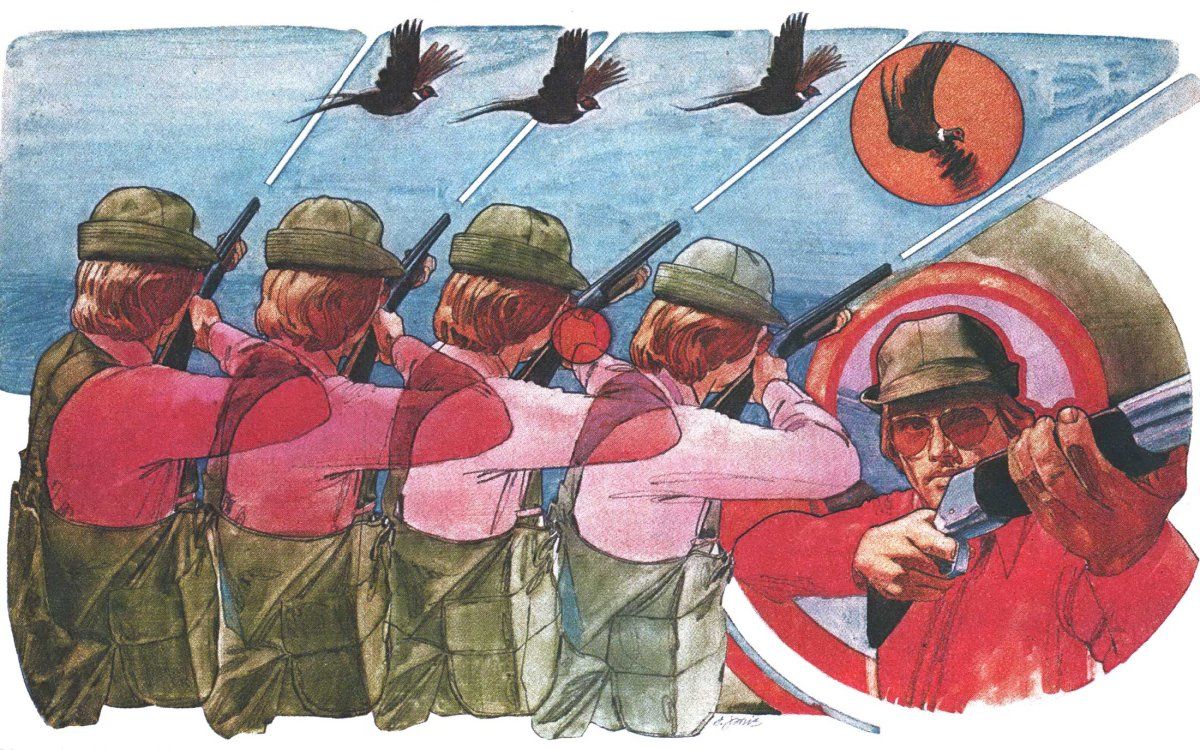
Zutz outlines four techniques for putting lead on moving targets, whether clay or feathered:
- Sustained lead, also called maintained lead. The shooter picks a lead distance, brings the gun ahead of the target, swings at the target's speed, and fires while keeping that lead.
- Swing-through, also called the fast swing. The gun starts behind the bird and sweeps through it.
- Pull-ahead. The shooter moves the muzzle ahead of the target and fires.
- Snap shot. The shooter points at a spot ahead of the bird and fires with no swing and no follow-through.
Zutz credits D. Lee Braun, a Remington skeet and trap pro, with naming the sustained method "maintained lead" in his book Skeet Shooting with D. Lee Braun. He points to his own record as a skeet and trap competitor, including a 1964 Wisconsin skeet co-championship in 12 gauge with 100 straight and a 150-straight shootoff.
His lead figures are the most useful part of the piece. On skeet's 20-yard stations, a sustained lead needs a full four feet. Ducks flying 70 feet per second at 40 yards need an 8.5-foot lead, using 4-shot loads leaving the muzzle at 1,330 feet per second. At 60 yards the lead grows to 14 feet. Zutz also names the most common failure: stopping the swing at trigger time, which cancels the forward allowance.
Background
Wingshooting instruction in the mid-twentieth century leaned heavily on skeet and trap, where the target path is predictable and the shooter controls the setup. Field hunters carried those habits into the duck marsh and the pheasant field. Sustained lead suits that world. A decoying duck or a crossing goose follows a steady line, so a shooter can measure distance and hold it.
Upland cover breaks that model. Ruffed grouse flush at close range, change direction in a split second, and jink through branches. American woodcock twist and dodge over alder thickets. Zutz's point is not new, but it has held up in print for five decades: the technique that wins over water fails in the woods. The sustained lead needs time and a predictable line, and brush offers neither.
Why It Matters for Gun Owners
Upland hunters take the hit first. Anyone chasing ruffed grouse, woodcock, or ringneck pheasant in thick cover needs fast-reacting techniques. Hunters in Wisconsin, Minnesota, Michigan, and the Northeast who split time between waterfowl and uplands face this problem every season. A shooter who only practices one method will keep missing the birds that match his weakness.
The fix costs little. Practice the fast swing and the snap shot on targets that break unpredictably. Set up a station where a thrower launches clays at random angles and distances. Keep the sustained lead for crossing birds, dove fields, and open-water ducks. Watch your follow-through. A stopped swing is the single error Zutz flags, and it shows up in every method.
DownRange Analysis
This piece is training content, not law, so Bruen does not apply here. The principle still matters for the gun owner who hunts. A shotgun is a tool, and a hunter who carries only one wingshooting method is carrying a tool with a missing piece. Zutz's advice holds up because the physics has not changed. Birds still fly the same way, and lead still scales with distance and speed.
Right now, go to the range or a sporting clays course before the next upland trip. Shoot a few boxes of target loads at random angles and watch where your muzzle goes. If you consistently shoot behind fast birds, your swing has stalled. Fix the swing before you buy another gun. Zutz wrote this in 1976, and it still beats most of the gear pitches on your feed.