NRA, FPC, and SAF Sue Maryland Over Glock Ban in SB 334
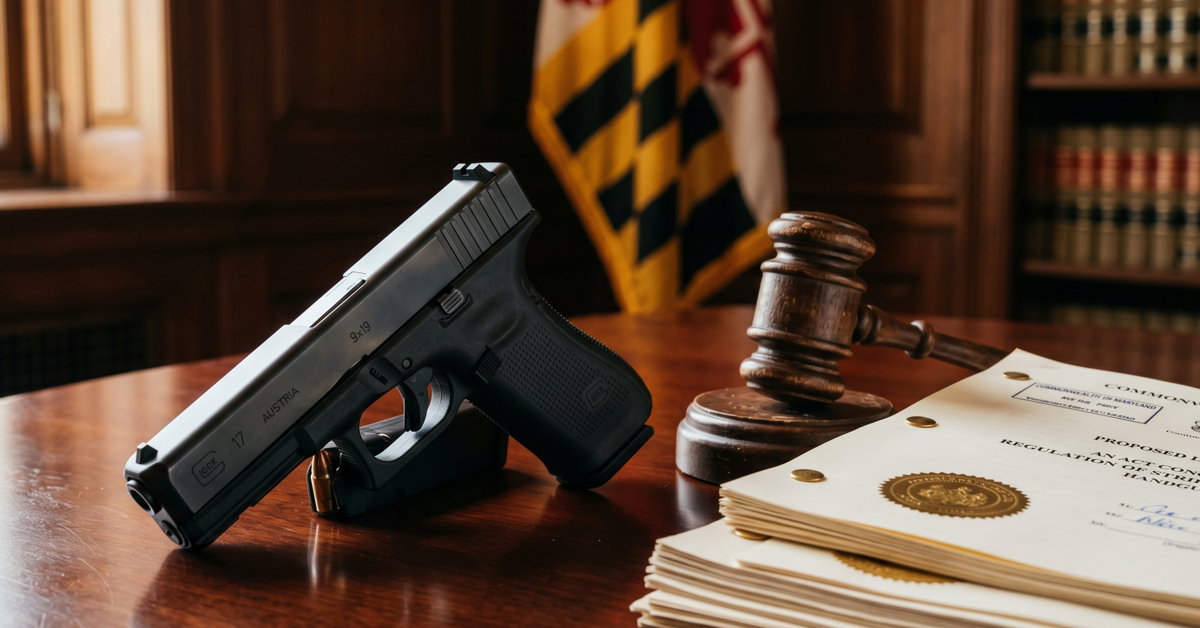
The National Rifle Association, Firearms Policy Coalition, and Second Amendment Foundation filed federal civil rights litigation against Maryland officials within hours of Governor Wes Moore signing Senate Bill 334 on May 27, 2026. The law bans the sale, manufacture, and transfer of nearly all Glock models and similar striker-fired handguns, classifying them as "machine-gun-convertible pistols" effective January 1, 2027. The immediate lawsuit signals the organizations view the statute as vulnerable to constitutional challenge under recent Supreme Court precedent. SB 334 targets one of America's most popular handgun platforms—Glock produces roughly 65 percent of law enforcement duty pistols nationwide and owns a dominant share of civilian carry weapons. The ban affects existing owners, manufacturers operating in Maryland, and dealers statewide.
Background and Context
Maryland's SB 334 rests on the premise that Glock pistols and functionally similar designs can be converted to fully automatic fire with aftermarket parts or modifications. This "machine-gun-convertible" theory has circulated in anti-gun advocacy for years but gained legislative traction only recently. The law follows the 2022 Supreme Court decision in New York State Rifle & Pistol Association v. Bruen, which struck down New York's carry licensing regime and established that firearm regulations must align with historical tradition. Maryland legislators argue the ban fits within historical precedent by targeting weapons capable of conversion, though critics note no historical parallel exists for banning entire lawful handgun models based on theoretical modification potential. The decision also reflects tension following District of Columbia v. Heller (2008) and McDonald v. Chicago (2010), which protected individual rights to possess handguns for self-defense while leaving room for certain regulations.
What This Means for Gun Owners
Maryland gun owners currently possess legally owned Glocks face an unsettled legal position. The law technically permits existing owners to retain firearms purchased before January 1, 2027, but prohibits transfer, sale, or manufacture of new units within state boundaries. This creates practical problems: a Maryland resident cannot legally pass a Glock to a family member, sell a used firearm, or legally obtain a replacement if their pistol is lost or stolen. Out-of-state purchases and interstate transfers would become illegal. The ban applies broadly—not just to military-pattern striker-fired pistols but to nearly all Glock models including standard duty and compact variants (G17, G19, G43, etc.). Gun owners in Maryland who rely on Glocks for self-defense face disruption to their lawful choices. Neighboring states like Virginia and Pennsylvania remain unaffected, meaning some residents may pursue out-of-state alternatives, though this creates legal liability under Maryland law.
Industry Impact
The NRA characterized SB 334 as unconstitutional and stated the organization will defend Second Amendment rights in court. The Firearms Policy Coalition issued a statement calling the law a "radical infringement" that targets America's most popular self-defense platform without evidence the ban prevents crime. The Second Amendment Foundation, led by Alan Gottlieb, indicated the lawsuit challenges both the substance of the ban and its application under Bruen's historical test. Glock did not issue immediate public statement but manufacturers and dealers operating in Maryland face compliance costs and business disruption. Maryland's Handgun Roster—which historically screened pistols for roster inclusion—becomes largely irrelevant under the new ban. Gun retailers statewide must cease sales of affected models January 1, 2027. The case will likely draw amicus briefs from state associations, national advocacy groups, and possibly manufacturers themselves.
What to Watch Next
The lawsuit will be filed in the U.S. District Court for the District of Maryland. Watch for the judge assignment—Chief Judge Deborah K. Chasanow and Judges Catherine C. Blake and Stephanie A. Gallagher handle significant Second Amendment cases in that jurisdiction. The plaintiffs will likely seek a preliminary injunction to block SB 334's January 1, 2027 implementation while litigation proceeds. Oral arguments on preliminary relief could occur by October or November 2026. The case will be argued through the Fourth Circuit Court of Appeals if either side appeals an adverse district court decision. That court has shown mixed receptivity to Second Amendment claims in prior cases. Expect discovery disputes over Maryland's evidence supporting the "machine-gun-convertible" theory—the state must produce studies, data, and expert analysis justifying the ban. Legislative activity in other states will track this case closely; similar bans have been proposed in California, New York, and Connecticut.
DownRange Bottom Line: Maryland's SB 334 represents the most aggressive assault on a lawful handgun platform in decades, and the immediate lawsuit by the NRA, FPC, and SAF signals genuine constitutional vulnerability. Gun owners should expect this case to reach appellate court within two years. If you own a Glock in Maryland, understand that transfers become illegal in seven months—sell, gift, or make other arrangements before January 1, 2027, or accept you cannot legally pass the firearm to family. This case will define whether states can ban entire handgun models based on theoretical conversion risk; the outcome matters far beyond Maryland.