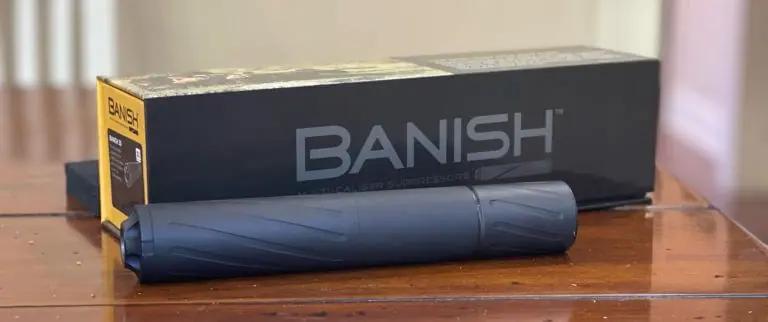
Silencer Central Delivers Suppressors Direct—But ATF Wait Still Bites
Silencer Central has streamlined suppressor purchases by shipping the Banish 30 directly to buyers' doors after Form 4 approval, cutting out the FFL middleman step. A recent real-world test confirmed the paperwork process works as advertised, though federal approval timelines remain the actual bottleneck. The model prioritizes convenience for customers already approved by the ATF.
Key Details
- The Banish 30 suppressor ships directly to the customer's address after Form 4 approval, eliminating the need for FFL transfer coordination.
- Paperwork submission and processing proved straightforward, with no hidden compliance friction reported.
- The real constraint remains the ATF's Form 4 processing timeline—doorstep delivery doesn't accelerate federal approval.
- This model operates within all federal NFA requirements; it simply relocates the delivery logistics from an FFL to the manufacturer.
Why It Matters for Gun Owners
Most suppressor buyers currently travel to an FFL to pick up a Form 4 approval—an extra errand after weeks or months of waiting. Direct-to-home shipping eliminates that step. For owners in rural areas or states with sparse FFLs, this removes real friction. You still wait on the ATF; you still file Form 4; you still pay the $200 tax stamp. What changes is the final delivery: it arrives at your house instead of requiring a drive to comply with pickup. This matters most for customers who live far from cooperative FFLs or prefer not to coordinate a separate trip after approval lands.
DownRange Analysis
Direct-to-door suppressor delivery is legal and operationally sound—Silencer Central handles the NFA compliance; the ATF still controls the approval. What's interesting is that this model exposes how much friction the traditional FFL transfer system creates, not because FFLs are required, but because coordination sucks. If more manufacturers and dealers adopt this approach, expect shipping convenience to become table stakes in the suppressor market. The Banish 30 test demonstrates the model works. The real opportunity: competing on delivery speed and logistics rather than just on product specs. For consumers, this is a pure win—faster last-mile delivery after you've already paid your tax stamp and waited. The ATF won't speed up, but you won't lose another afternoon to logistics.