Glock 18 shipped fully automatic from factory before ATF targeted conversion devices
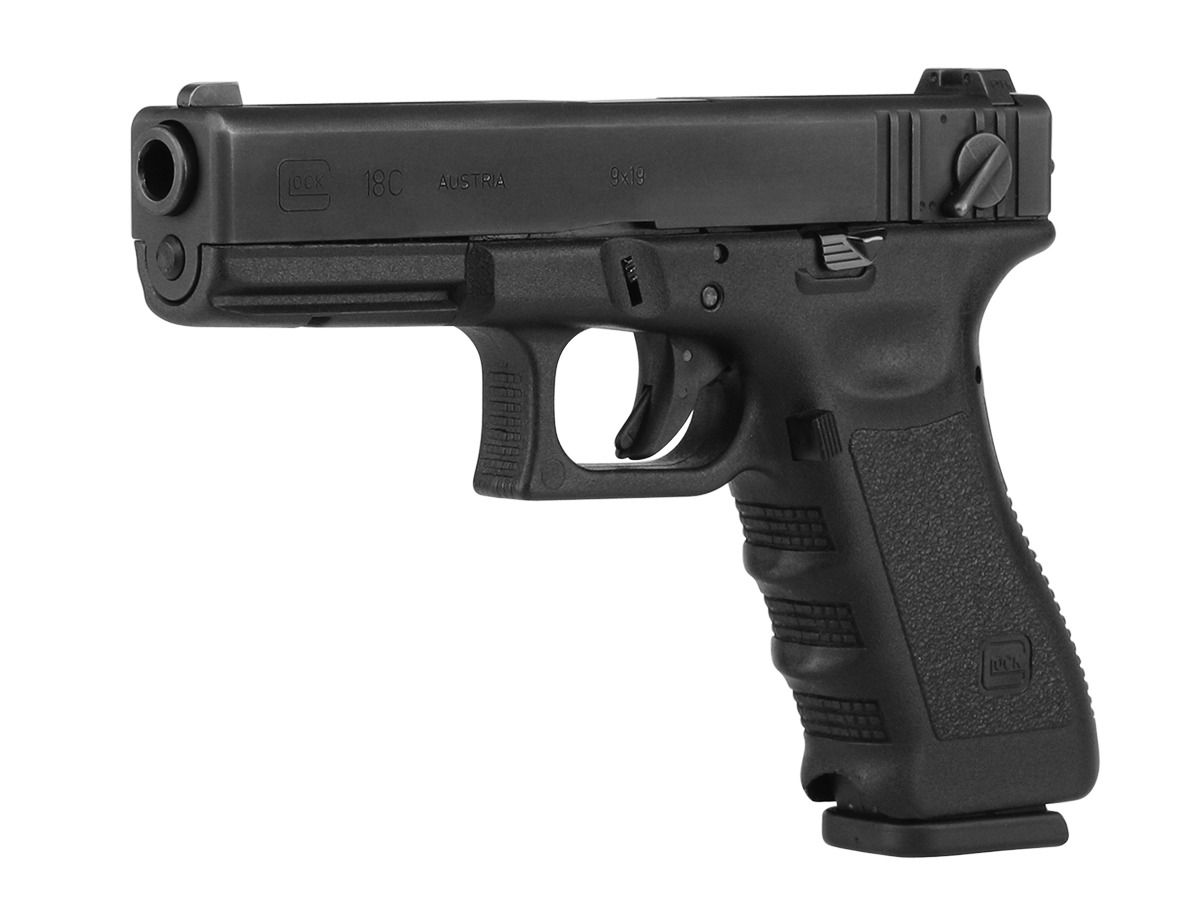
The Glock 18 entered military and law enforcement service as a factory-configured, fully automatic polymer pistol decades before aftermarket auto sears became a federal prosecution priority. Unlike today's binary triggers and illegal conversion switches retrofitted to semi-auto pistols, the Glock 18 arrived with full-auto capability built in from the manufacturer. This distinction cuts to the heart of how the ATF classifies firearms and why regulators maintain different standards for factory designs versus aftermarket modifications.
The Glock 18 cycles significantly faster than the semi-automatic Glock 17, delivering sustained burst and full-auto fire in the 9x19 Parabellum cartridge. Factory specifications show cyclic rates exceeding 1,200 rounds per minute in burst mode. Only pre-1986 machine pistols transfer legally to civilians under National Firearms Act restrictions, making transferable Glock 18 examples extremely rare and expensive on the NFA registry. Post-1986 production remains restricted exclusively to military and law enforcement agencies.
Why It Matters for Gun Owners
The Glock 18's existence as a factory machine pistol demolishes the regulatory argument that automatic fire is inherently unmanufacturable or unsafe. Glock proved decades ago that adding full-auto capability to a reliable 9mm pistol required only minor engineering modifications to the firing mechanism. The design functioned reliably in military service across multiple countries, establishing that automatic pistols work as intended when engineered properly.
The ATF's aggressive prosecution of aftermarket conversion devices rests entirely on legal prohibition, not mechanical feasibility. Prosecutors charge that modifying a semi-auto firearm into a machine gun violates federal law—specifically the National Firearms Act and subsequent amendments banning new civilian machine gun transfers after May 1986. The agency does not argue that such conversions are impossible or inherently dangerous. That distinction matters significantly for gun owners evaluating enforcement priorities.
Understanding the Glock 18 context helps owners recognize the regulatory line between factory designs and aftermarket modifications. Manufacturers face different legal obligations than individuals. A company producing firearms for military contracts operates under different licensing standards than a machinist selling conversion parts. The Glock 18 demonstrates that manufacturers retain authority to produce automatic weapons for restricted markets. That authority does not extend to civilian conversion devices, regardless of technical feasibility.
Background
Glock introduced the Model 18 in the 1980s as a natural extension of the wildly successful Model 17 platform. Austrian law enforcement and military agencies ordered the variant for specialized units requiring sustained automatic fire. International military sales followed across NATO allies and allied nations worldwide. The design proved reliable in field conditions, accumulating decades of service history across multiple continents.
The pre-1986 Hughes Amendment fundamentally altered civilian access to machine guns. Congress banned manufacture of new automatic weapons for civilian sale effective May 19, 1986. Glock 18s produced before that date remain transferable under NFA regulations, though the limited pre-1986 supply means transferable examples command premium prices. Recent market data shows transferable Glock 18s trading between $25,000 and $40,000 depending on condition and history.
DownRange Bottom Line
The Glock 18 remains important context for understanding modern firearms regulation. It proves fully automatic pistols can function reliably in production form. It establishes that manufacturer authority differs from civilian modification rights. For daily carriers and gun owners, the Glock 18 history illustrates how regulatory categories—factory versus aftermarket, military versus civilian, pre-1986 versus post-1986—fundamentally shape what firearms law permits. Understanding these categories protects owners from assuming technical capability equals legal permission.