
How to Actually Buy a Handgun in Canada: The Legal Path and What You Can Get
You need an Restricted PAL (R-PAL) before you can even walk into a gun shop to look at handguns. That's the first brick wall. The Restricted Possession and Acquisition Licence is a separate document from your regular PAL, and getting one means applying through your provincial firearms officer, passing a stricter background check than the standard PAL, waiting 45 days minimum, and then getting interviewed—sometimes in person, sometimes by phone. If you're in Ontario or Quebec, prepare for longer waits. I know people who've been waiting six months just to get interviewed. The R-PAL costs about $60 and is good for five years, assuming the CFO doesn't deny you.
Here's what most people miss: having an R-PAL alone is not enough to buy a restricted handgun. You also need to be a member of an approved shooting club that the RCMP recognizes. If you're buying a restricted handgun—which is nearly every modern handgun in Canada—your purchase has to be authorized by that club. The club actually gets contacted by the Canadian Firearms Program to verify you're a legitimate member before the gun shop can complete the sale. Without club membership, the CFO will deny your authorization to purchase. Major clubs that work nationally include the International Practical Shooting Confederation (IPSC) clubs across Canada, Three Hundred Blackbirds in Ontario, and local trap and skeet clubs. Check the RCMP's list of approved clubs—if your local range isn't on it, you need to find one that is. Membership typically runs $200 to $400 annually.
The Three Categories: Know What You Can Actually Buy
Non-Restricted Handguns are rare in Canada. We're talking about .22 rimfire pistols and revolvers, and a handful of other exceptions. The Ruger Mark IV in .22 LR is technically non-restricted. You can own one with just a standard PAL, no club membership needed, and no registration with the CFO—though it still gets registered at the point of sale by the retailer. These are good for learning trigger control and cheap practice, but they're not what most people think of when they imagine buying a handgun.
Restricted Handguns make up 99% of what's actually available: modern centerfire pistols and revolvers in calibers like 9mm, .40 S&W, and .45 ACP. This is where you find Glocks, Berettas, CZ pistols, and SIGs. You need the R-PAL, club membership, and CFO authorization. The gun gets registered to you specifically with the serial number recorded in the national registry. You can take it to your club, and under certain conditions you can transport it to a gunsmith or to sell it, but you cannot carry it for self-defense on the street—that's illegal. If you move provinces, you need to notify the CFO. These are serious legal commitments.
Prohibited Handguns are off-limits. This includes any handgun with a barrel under 105mm, handguns designed to discharge .25 or .32 ACP ammunition, and a list of specific models deemed prohibited since 1998. Many classic pistols fall here: the Walther PPK, Bersa Thunder .380, and any compact .25 or .32. Don't waste your time looking for these. A few older prohibited pistols are still legal if registered before May 1, 2020, but that grandfathered window has closed. If you inherit a prohibited handgun, you must surrender it to the RCMP or face serious federal charges.
The Registration and Authorization Process
Once you have your R-PAL and club membership, buying a handgun goes like this: you find a gun shop, decide on the model, the shop runs an Authorization to Purchase (ATP) form. The CFO contacts your club to verify membership. Assuming you're clear, the ATP gets approved, usually within a few days. You go back to the shop, complete the sale (expect $50–$150 in shop fees on top of the gun's price), fill out the federal registration form, and the retailer registers it with the CFO on their end. The gun is now linked to you in the national registry. You get a registration certificate. Keep that certificate with you when transporting the handgun. If you sell it later, the new owner needs their own R-PAL and club membership, and the gun gets re-registered to them. This is why private sales of restricted firearms are complicated—most people just sell through shops to avoid legal headaches.
The Best First Handguns Available in Canada Right Now
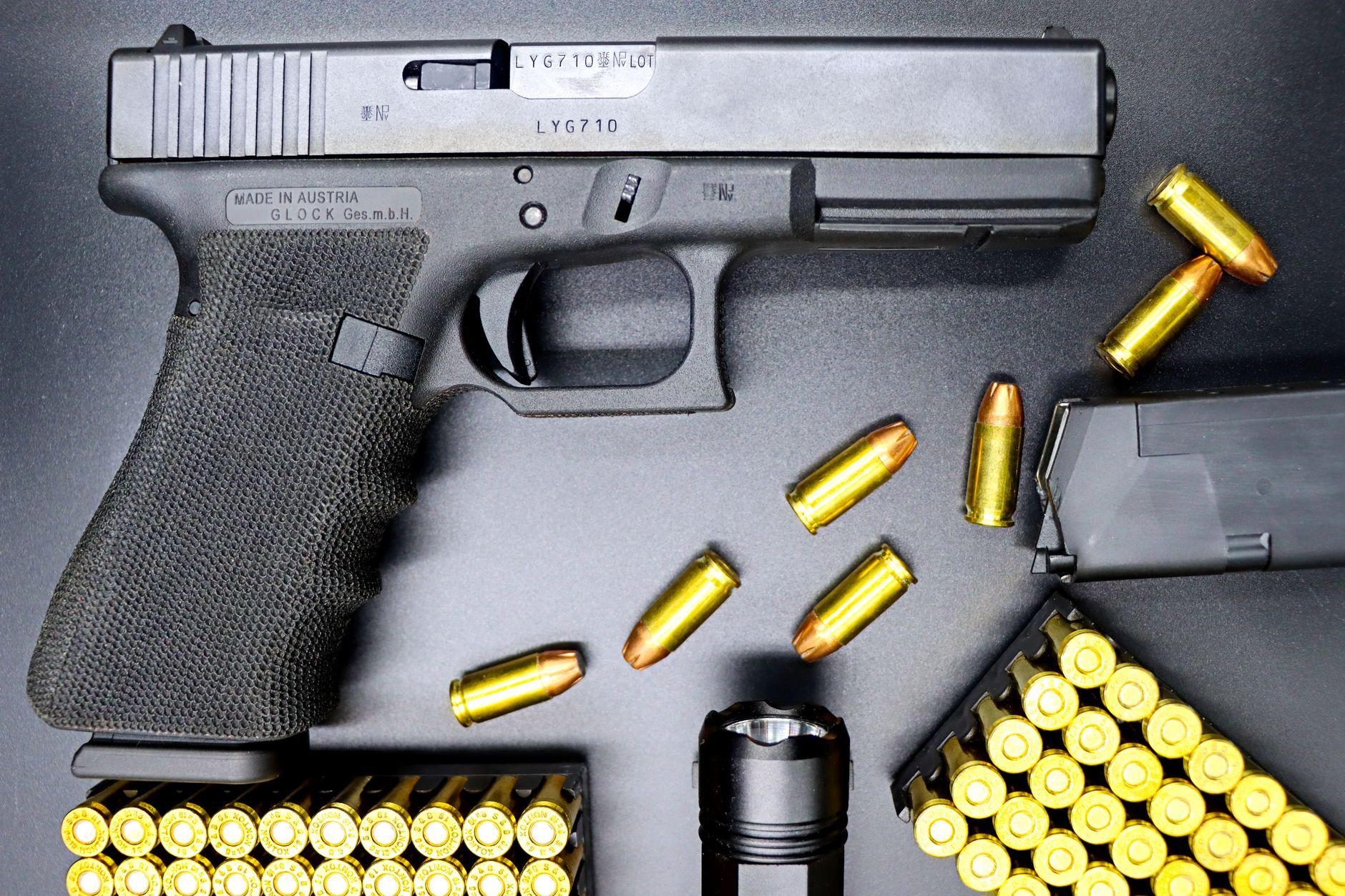
Glock 17 (9mm) — This is the starting point for many Canadian shooters. It's reliable, simple, parts and magazines are everywhere, and instruction is easy to find. Most ranges have experienced shooters who know Glocks. New ones run $650–$750 in Canada depending on the generation. Gen 5 is current stock. If you're new to handguns, this is honest advice: the Glock 17 works and doesn't pretend to be something fancy.
Beretta 92FS (9mm) — A step up in ergonomics and aesthetics. Smooth trigger, decocker, proven design from decades of military and police use. Canadian pricing sits around $800–$900. Takes a bit longer to clean than a Glock, but shooters who choose it tend to really like it. Better sights stock than many competitors at this price point.
CZ Shadow 2 (9mm) — If you're getting into competition shooting, this is the gun to consider. Single-action trigger, excellent ergonomics, widely used in IPSC competition. Around $1,100–$1,300 here. Not beginner-friendly in the sense that the learning curve is steeper, but it rewards good technique immediately. The trigger is genuinely something special.
SIG Sauer P226 (9mm) — Another solid choice, military and police standard in many countries. Good ergonomics, reliable, decent trigger out of the box. Expect $900–$1,050. Similar in capability to the Beretta but with a slightly different grip angle and controls.
Smith & Wesson M&P9 M2.0 (9mm) — American-made, good aftermarket support, comfortable grip for larger hands. Around $750–$850. Reliable and low-drama—not as iconic as the Glock but just as functional.
Start with your R-PAL, get into a club, find a shop owner who'll actually answer questions, and go shoot whatever they have in stock. Your first handgun matters less than learning to shoot it well. Everything else—fancy triggers, night sights, custom work—comes after you've put 1,000 rounds downrange.
```