
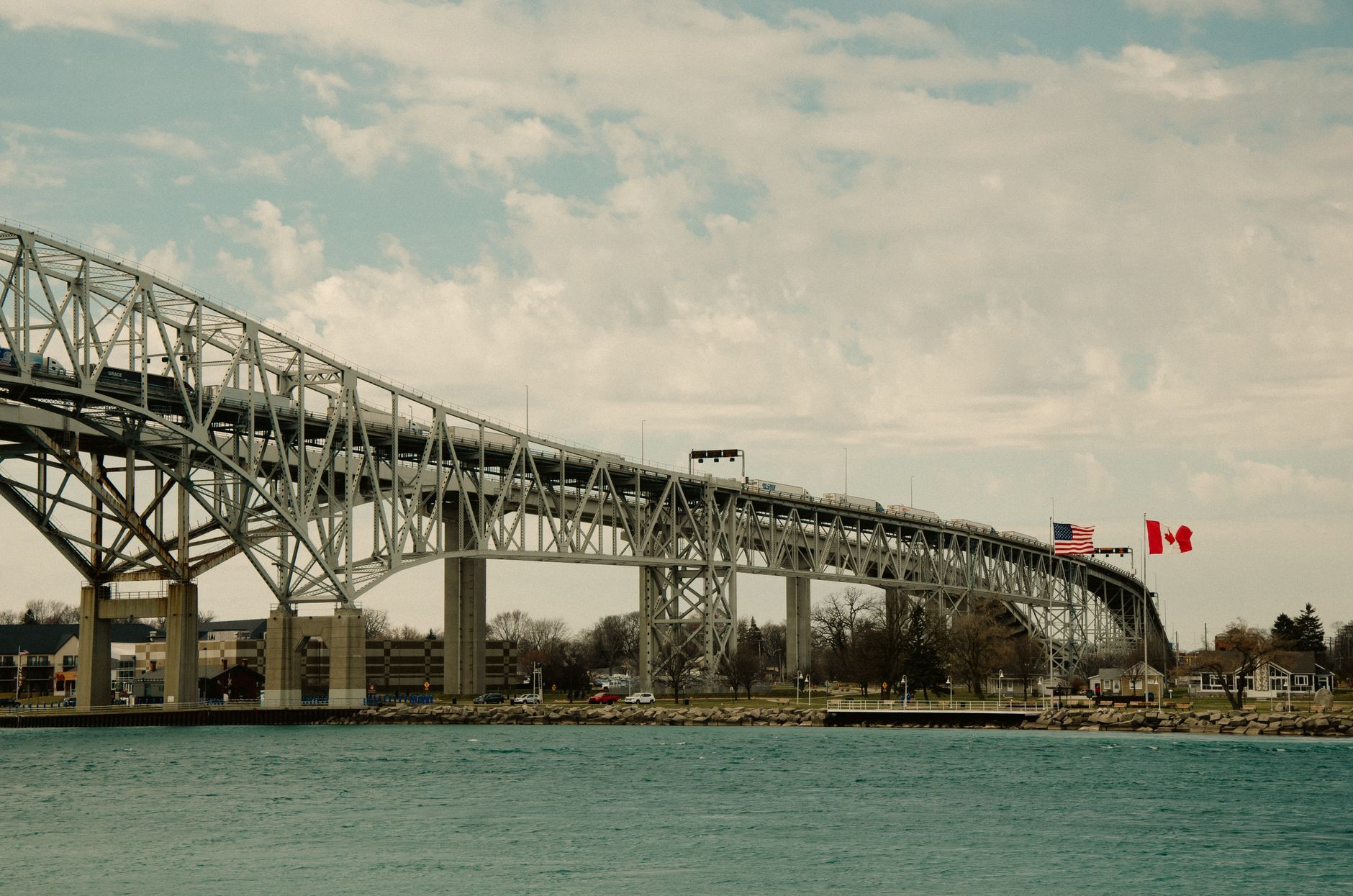
Crossing the Border with Guns: What CBSA and the ATF Actually Want From You
I've crossed into the US with firearms exactly four times in the last six years, and I've watched friends get turned around because they didn't fill out one form correctly. The Canada-US border checkpoint isn't the place to learn what you should've known before you left home. CBSA officers process hundreds of declarations daily—they know when you're unprepared, and unprepared means delayed, confiscated, or denied entry.
Let me be direct: if you're a Canadian non-resident taking firearms into the United States, you need CBSA Form BSF519. That's the Personal Effects Accounting Document. This isn't optional paperwork. You fill it out in duplicate, declare every firearm you're bringing across, and keep a copy with you. The form lists your name, address, passport number, and itemizes what you're taking—serial numbers, calibres, makes and models. You present it when you cross. CBSA uses this to confirm you're bringing the same guns back home. Lose a rifle or handgun south of the border and can't produce that form? You're paying duty on replacement value, and that gets expensive fast.
The form costs nothing. You can download it from the CBSA website or ask for one at the border. Fill it out before you arrive at the booth. A border officer once told me they can spot someone who's never crossed with firearms because those people start filling out the form for the first time while sitting in the inspection lane, holding up the line behind them. Don't be that person.
ATF Form 6NIA: What US Citizens Carry Into Canada
If you're a US citizen bringing firearms into Canada, you need a different piece of paper entirely. The form is ATF Form 6NIA—Notice of Importation of Certain National Firearms Act Firearms. This applies specifically to NFA-regulated weapons: suppressors, short-barreled rifles, short-barreled shotguns, and machine guns. Canadian law treats these items differently than US law does, and the ATF requires written notification before you cross.
Here's what trips up most Americans: Canada prohibits suppressors entirely. A suppressor is a prohibited device under the Criminal Code. You cannot legally own, import, or possess one in Canada. Full stop. The ATF doesn't care about Canadian law when you're leaving the US, but CBSA does care when you arrive. I've seen officers pull suppressors off a truck at the Blaine-Douglas crossing and seize them with zero sympathy. The owner thought because it was legal in Washington State, it would be fine. It wasn't.
Which Canadian Firearms Are Illegal in the United States
Going the other direction, certain Canadian-legal firearms cause problems at US ports of entry. The Tavor X95, IWI Tavor 7, and similar bullpup rifles are sometimes flagged by US customs because some states regulate them differently or because officers aren't familiar with them. That's more of a state-level issue than a federal one, but it happens.
More problematic: any rifle or shotgun with a magazine capacity above federal limits in certain states. If you're driving through California, New York, or Massachusetts, and you have magazines that exceed those states' limits, you're breaking their law. The magazine, not the gun, becomes the problem. I bring only single magazines or permanently pinned magazines when I cross through those states—it's not worth the argument.
Semi-automatic rifles manufactured after 1989 with certain features are regulated under the US 1994 Assault Weapons Ban in some states. A Canadian-legal AR-15 might be restricted in California or New York depending on configuration. The ATF's National Firearms Act regulations also apply to any short-barreled rifle, regardless of where it was manufactured. A Canadian SBR is still an NFA item once you cross the border.
Hunting Import Rules: Temporary vs. Permanent
Most people crossing for hunting use the temporary import route. You're bringing a hunting rifle or shotgun south for a specific season, then bringing it back. That's where BSF519 comes in—it documents that you're the same person bringing the same gun back.
Permanent import is different and requires more paperwork. If you're moving to the US and want to bring your firearms collection, you need to follow ATF procedures and potentially state-level registration. This isn't a weekend trip; this is a residency change. Talk to US Customs and Border Protection before you go.
For hunting specifically, know that some states require non-resident hunting licences and tags before you even get to the gun part. A rifle is useless if you can't legally hunt with it. Get your documentation in order weeks before the season opens.
Common Mistakes I've Watched People Make
- Not declaring ammunition. I've watched officers confiscate entire boxes of ammunition because someone thought only the firearm itself needed to be declared. Ammunition goes on your form too.
- Incorrect serial numbers on BSF519. You write down a serial number wrong, can't match it to your rifle at the border, and now you've got a problem. Write them down at home, verify them twice, then verify them again before crossing.
- Assuming state law doesn't matter. Federal law sets a floor. States build on top of it. Know where you're going and what that state allows.
- Not knowing the difference between prohibited and restricted. In Canada, restricted firearms require licensing and registration. In the US, they don't. Bringing a restricted Canadian handgun across the border creates complications even if it would be legal in the US state you're visiting.
- Storing firearms incorrectly while crossing. CBSA expects firearms to be unloaded and stored safely—locked case, locked vehicle compartment, or similar. An accessible rifle in your truck bed invites seizure.
Penalties for Getting It Wrong
CBSA can seize firearms on the spot. You'll lose them. You might face a fine up to $1,000 for false declarations. The ATF can charge you with illegal importation, a federal offence. I know someone who forgot to declare a handgun and ended up banned from entering the US for five years.
The smartest move is to treat the border like a firearms exam. You either know the material or you don't. Fill out your forms at home, verify every serial number, know your destination state's laws, and declare everything. The officers on both sides of this line aren't trying to trap you—they're trying to do their job. Make it easy for them, and you'll cross without incident.
```