
Self-Defence in Your Home: What Canadian Law Actually Allows—and What It Doesn't
If you're thinking about keeping a firearm for home defence in Canada, stop right here. The law isn't what you think it is, and the gap between what feels reasonable and what a court will accept is wider than most gun owners realize. I've watched cases unfold where homeowners did everything they thought was right and still faced Criminal Code charges. Section 34 of the Criminal Code gives you the right to use force—including lethal force—to defend yourself, but that right has hard limits, and understanding them before you ever need to pull a trigger could be the difference between acquittal and conviction.
Section 34: Your Legal Right to Defend Yourself
Section 34 states you can use force to protect yourself if you reasonably believe force is being used or about to be used against you. The force you use must be reasonable in the circumstances. That's it. That's the whole rule. No duty to retreat. No requirement to warn first. But "reasonable in the circumstances" is exactly where home defence gets complicated.
The courts don't ask whether you were scared. They ask whether a reasonable person in your exact situation would have believed force was necessary and whether the force you used was proportional to the threat. If an intruder is unarmed and backing away, shooting them isn't reasonable. If someone is actively threatening your life, it probably is. The middle ground—someone breaking in at 2 a.m.—is where homeowners get prosecuted.
Cases That Went Wrong: Real Canadian Precedent
Colton Boushie's death in 2016 wasn't self-defence—it was a rancher's property dispute that ended in a jury acquittal but exposed how narrowly courts interpret "reasonable belief." More relevant to your situation is the case of R. v. Forde, where a London, Ontario homeowner fired at intruders and faced charges because the Crown argued the threat had diminished by the time shots were fired.
Then there's the harder one: a Toronto homeowner kept a loaded handgun in his nightstand. Two intruders broke in. He grabbed it and fired, hitting one attacker. He was initially charged with careless storage of a firearm—not the shooting itself, but how he kept the gun accessible. That case settled, but it shows the Crown will layer charges. You can win the self-defence argument and still lose on storage violations.
The R. v. Khill case in 2021 involved a similar scenario in Ontario. A homeowner shot an intruder; self-defence was accepted, but the legal costs and the years of uncertainty gutted the family. The acquittal came after the Supreme Court clarified that self-defence shouldn't require you to know exactly what weapon an attacker has, but Khill still spent hundreds of thousands defending himself.
What Courts Actually Look At
Judges and juries consider these factors when evaluating whether your force was reasonable:
- Nature of the threat: Was the intruder armed? Were they moving toward you or away? Did they say anything threatening?
- Imminence: Was the threat happening right then, or was it over by the time you fired?
- Your knowledge: What did you know about the threat at the moment you acted?
- History between you and the attacker: Did you know them? Was there a prior dispute?
- Proportionality: Did the force you used match the threat level?
- Alternatives: Could you have locked a door, called police, or escaped instead?
- Your actions afterward: Did you call 911? Did you pursue the attacker into the street?
That last point matters. Homeowners who chase an intruder outside and continue firing have lost self-defence claims because the threat has moved away from their home and family. Once the intruder is fleeing, you're no longer defending—you're pursuing. Courts won't accept that.
The Storage Problem: Accessible vs. Legal
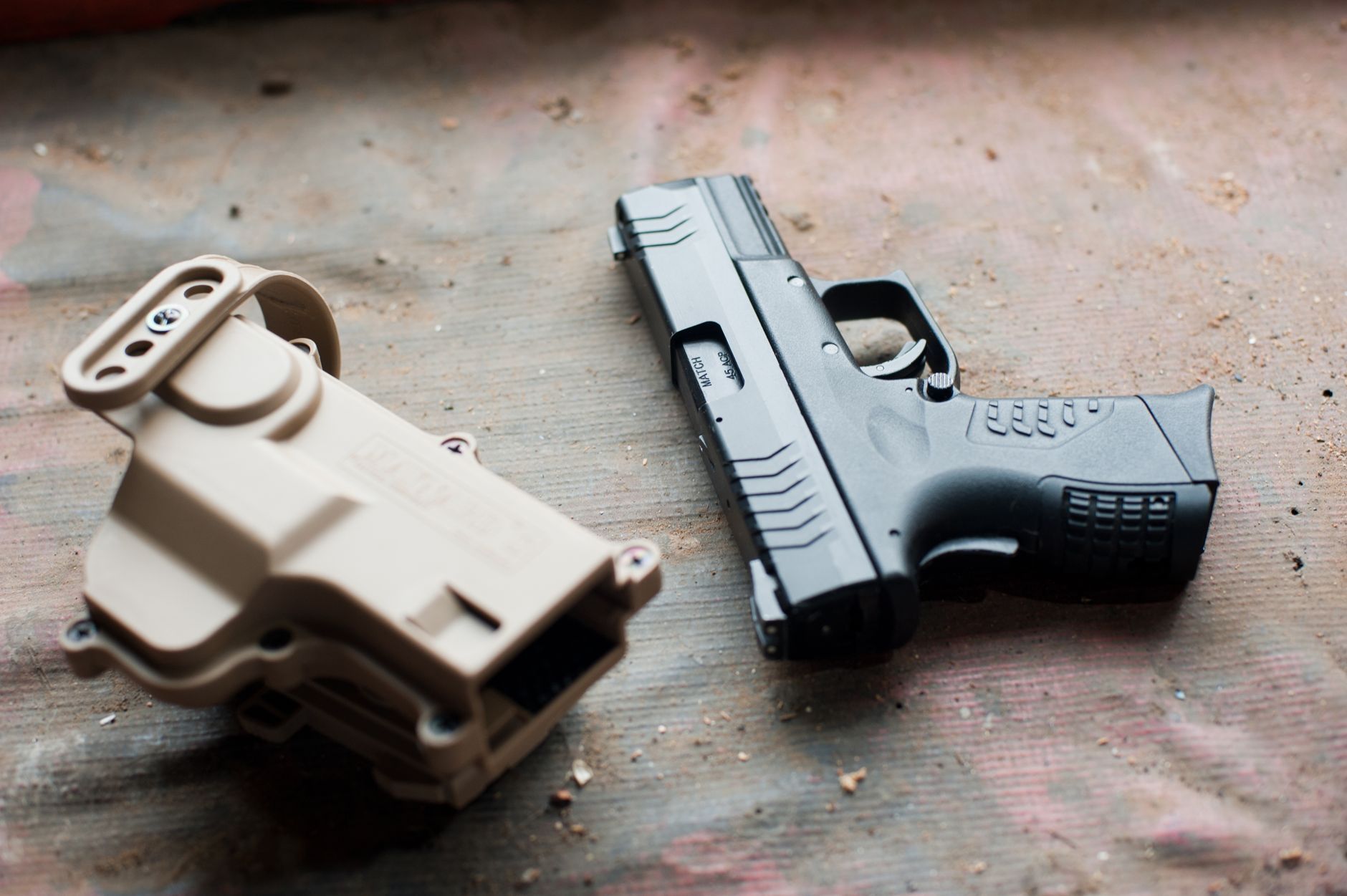
Here's the contradiction nobody likes to admit: the law requires firearms—especially restricted ones like handguns—to be stored securely. A locked safe bolted to the floor is legally compliant. But a locked safe takes time to open during a home invasion. A loaded handgun on the nightstand is accessible but violates section 105 of the Criminal Code.
Some homeowners try the middle ground: a quick-access safe that opens with a combination or fingerprint scan. Better than a nightstand, but still vulnerable to charges if there's a break-in and someone else accesses the firearm. If your teenager finds the gun and something goes wrong, you're liable. If an intruder overpowers you and grabs your accessible firearm, you've created a weapon for them.
The safe play: store your firearms legally in a locked safe or cabinet, locked in a room, with ammunition stored separately. Accept that in a home invasion, you'll have 30 seconds to reach it—maybe less. That's the legal reality in Canada.
What Firearms Are Actually Available
Handguns require a Restricted PAL and are heavily regulated. If you have one, it must be registered, and you can only transport it to a range or gunsmith—never directly for home defence. That makes pistols a poor choice legally for home defence despite their accessibility.
A shotgun with a 12-inch barrel (shorter than 18.5 inches makes it non-restricted) is your best option. A Mossberg 500 Mariner or Remington 870 Marine Magnum are purpose-built home defence guns, both reliable and legal to own with a Standard PAL. They're intimidating, effective, and legally defensible because a shotgun's stopping power is undeniable against a genuine threat.
A rifle like an AR-15 or SKS is less ideal for home defence because shooting through walls into adjacent rooms risks hitting family members or neighbours. Shotguns, fired with discipline, are more controlled in a home environment.
The Bottom Line
Home defence with a firearm is legal in Canada. You can use lethal force if a reasonable person would believe it necessary. But you'll defend not just the shooting itself but every decision before and after: how you stored the gun, whether the threat was genuine, whether you exhausted alternatives, and whether you pursued beyond your property line.
Get proper training. Know your local police response time. Store your firearm legally. Call 911 first. And understand that even a justified shooting will drain your bank account and damage your life. That's the real calculus of home defence in Canada.
```