
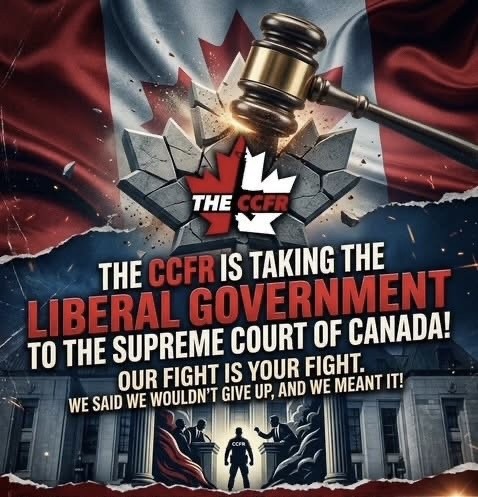
Canadian Gun Lobby Files Its Supreme Court Case Against Ottawa
The Canadian Coalition for Firearms Rights (CCFR) has filed its factum with the Supreme Court of Canada, ahead of the court's upcoming deadlines. The filing was prepared by the group's legal team and is the written argument the court will read before any hearing. CCFR says the case belongs to its members and supporters, not to the organization itself, and it has committed to publishing its arguments openly so members can see exactly what is being argued on their behalf.
Key Details
A factum is the written submission each party files with the Supreme Court of Canada. It sets out the legal questions, the party's position, and the authorities it relies on. Filing it marks a formal step in the appeal process and locks in the framework the court will consider. CCFR has said it will share the contents with its supporters, which gives members a direct look at the legal reasoning rather than a summary filtered through a press release.
Why It Matters for Gun Owners
Canadian firearms law has moved steadily toward tighter restrictions over the past several years, and the Supreme Court has the final word on whether those measures stand under the Charter of Rights and Freedoms. For a Canadian owner, a ruling from the top court sets the rules for everyone, not just the parties in the case. If you hold a firearms licence, own restricted or prohibited firearms, or compete in sport shooting, the outcome determines how far government can go in regulating lawful ownership. Read the factum when it becomes available, compare the arguments to the government's response when that is filed, and keep your licence and registration records current, since procedural compliance matters regardless of how the litigation turns out.
DownRange Analysis
Courts reviewing firearms restrictions in Canada generally weigh whether a measure is a reasonable limit on rights, which is a different test from the American Second Amendment framework under Bruen. Canadian litigants cannot simply copy U.S. history-and-tradition arguments, so the strength of CCFR's filing depends on how well it grounds its position in Charter jurisprudence. Gun owners should treat this as a long process. Supreme Court decisions take months to produce, and the practical step for now is to stay informed, support the legal effort if you are a member, and avoid acting on rumours about the outcome before the court rules.