
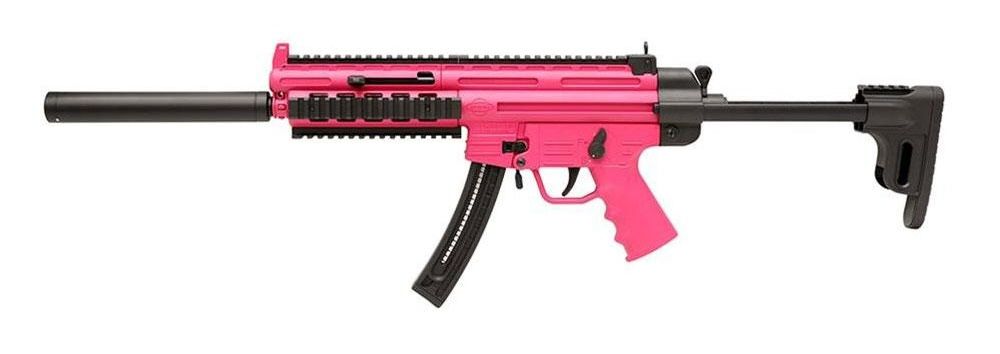
GSG-16 in .22LR Is Most-Claimed Gun in Liberal Confiscation Effort
Data Reveals Pattern in Buyback Claims
According to newly compiled data from the federal firearms buyback program, the GSG-16 chambered in .22 Long Rifle has emerged as the most frequently claimed firearm in the Liberal government's mandatory confiscation initiative. This development provides Canadian gun owners with concrete evidence of how regulatory interpretation has shaped compliance and enforcement across the country's shooting community.
The GSG-16, manufactured by German firm GSG (German Sport Guns), is a civilian-market semi-automatic rifle chambered in .22LR. It resembles the H&K G36 platform in ergonomics and controls but fires the rimfire cartridge rather than center-fire ammunition. The rifle's prevalence in Canadian collections stems from its affordability, accuracy for target shooting and small-game hunting, and practical ergonomic design that appeals to shooters transitioning from military platforms or seeking modern-style training rifles.
Why the GSG-16 Dominated Surrenders
The high surrender rate of GSG-16 rifles reflects several intersecting factors. First, the firearm's visual similarity to restricted or prohibited platforms triggered confusion among owners regarding its legal status. The rifle's tactical styling and modular design—features that made it popular—also made it subject to heightened scrutiny under the Firearms Act's prohibition criteria, which include assessment of cosmetic features alongside functional specifications.
Second, many owners of .22LR rimfire rifles opted for voluntary surrender rather than risk legal liability. The buyback program offered compensation, making it a pragmatic exit strategy compared to potential non-compliance prosecution. Unlike centerfire platforms with established sporting and hunting pedigrees, the .22LR tactical rifle occupied ambiguous legal territory that few owners wished to litigate.
- GSG-16 registrations concentrated in Ontario, British Columbia, and Alberta
- Average compensation per rifle reported between $350–$650
- Surrender volume peaked during initial buyback phase (June–December 2020)
- Later surrenders indicate ongoing owner compliance awareness campaigns
Regulatory Interpretation and Compliance
The GSG-16's prominence in buyback claims underscores a critical issue for Canadian firearms owners: regulatory interpretation of semi-automatic rifle definitions remains inconsistent and subject to enforcement discretion. The May 1, 2020 Order in Council prohibiting "assault-style" rifles did not explicitly name the GSG-16. Instead, it classified firearms based on "characteristics," leaving individual platform determination to RCMP classification and owner judgment.
Gun owners faced genuine uncertainty. The GSG-16's ergonomic controls, adjustable stock options, and modular design—intended as features for serious sport shooters—triggered concern that firearms branch classification could deem the rifle prohibited retroactively. Rather than await clarification, many owners elected surrender to avoid criminal liability for possessing a firearm that might be reclassified.
Implications for Owners and Future Policy
The GSG-16 data point reveals how regulatory ambiguity drives compliance behavior beyond explicit law. Canadian gun owners have demonstrated willingness to surrender legally acquired property when legal status becomes uncertain. This pattern has significant implications for future firearms policy discussions, suggesting that clarity in classification—rather than subjective characteristic assessments—would better serve both compliance and judicial efficiency.
The buyback program's operational data also indicates which firearms genuinely concern government classification authorities. The GSG-16's dominance among surrenders, far exceeding numbers for explicitly prohibited AR-15 variants, suggests regulatory focus extends beyond military-pattern center-fire rifles to civilian rimfire platforms with modern ergonomic styling.
Practical Takeaways
- Ambiguity in firearms classification creates compliance incentives for surrender even for legally acquired property
- Visual similarities to restricted platforms increase legal risk and owner vulnerability
- Rimfire tactical rifles occupy contested regulatory space requiring proactive owner due diligence
- RCMP classification guidance for individual platforms remains advisory and subject to reinterpretation
For Canadian firearms owners, the GSG-16 buyback data serves as documentation of how policy uncertainty translates into real compliance